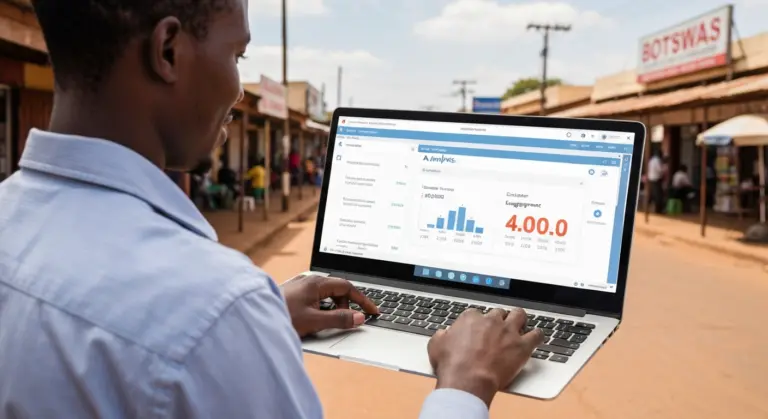


In the dynamic landscape of Botswana’s economy, a lean business plan offers a streamlined approach to planning. It is perfect for entrepreneurs in Gaborone, Francistown, and beyond who need efficiency and focus rather than 50 pages of fluff. If you want to move from idea to action quickly, the one-page plan is your best friend.
Most small business owners get stuck in “analysis paralysis” when writing a business plan. A lean plan removes that barrier, allowing you to test your ideas in the real Botswana market without wasting months on documentation.
What is a Lean Business Plan?
A lean business plan is a simplified, agile version of a traditional plan. Inspired by lean startup methodologies, it emphasizes flexibility and quick adjustments. It typically consists of only the essential components needed to develop and guide a business.
For a local entrepreneur handling limited resources, this plan provides strategic clarity. Instead of predicting the next five years, you focus on the immediate Problem, Solution, and Value Proposition. This approach is particularly useful if you are exploring low-cost business ideas in Botswana where speed to market is everything.
Core Principles of a Lean Startup Plan
The lean startup plan focuses on a cycle of Build-Measure-Learn. Key elements include:
- Hypothesizing: What do you *think* Batswana customers want?
- Testing: Selling a small batch or service to see if they actually pay for it.
- Iterating: Changing your approach based on real-time feedback (e.g., if customers prefer paying via Orange Money over bank transfers).
Lean Plan vs. Traditional Business Plan

While traditional business plans are detailed and extensive, lean plans are concise and to the point. Here is a quick comparison of why you might choose one over the other in the local context:
| Feature | Lean Business Plan | Traditional Plan |
|---|---|---|
| Length | 1 to 2 pages | 20 to 50+ pages |
| Time to Create | 1 hour to 1 day | Weeks or months |
| Primary Use | Internal strategy and agility | Bank loans, CEDA, or NDB funding |
| Update Frequency | Weekly or Monthly | Annually (or never) |
Benefits for Botswana SMEs
Lean plans allow for cost-effective strategy formulation. If you are applying for a trading license or registering with CIPA/OBRS, you need the basics. However, for your day-to-day operations, the lean plan keeps you nimble. It enhances your pitch effectiveness by forcing you to explain your business in 30 seconds rather than 30 minutes.
How to Create a One-Page Business Plan

Creating a one-page business plan ensures you focus on what truly matters. Here is how you can build one tailored for Botswana’s market.
1. Define Your Model with the Business Model Canvas
The Business Model Canvas (BMC) is the gold standard for lean planning. It maps out:
- Value Proposition: Why should a customer in Gabs buy from you instead of a big mall shop?
- Customer Segments: Are you targeting students, government employees, or rural farmers?
- Revenue Streams: Will you accept cash, FNB eWallet, Orange Money, or MyZaka?
Learn more about the difference between a business model and a business plan.
2. Key Metrics and Local Goals
Identify metrics that directly impact your business. In Botswana, this might include:
- Regional Reach: How many villages can your delivery reach?
- Social Media Engagement: How many inquiries are coming from your WhatsApp Business or Facebook Page?
- Referral Rate: Are people in your local network recommending you?
3. Financial Basics (The High-Level Numbers)
Don’t get lost in complex spreadsheets yet. Focus on:
- Startup Costs: For many home-based businesses, this might be between P500 and P5,000.
- Break-even Point: How many vetkoeks, shirts, or hours of consulting do you need to sell to cover your monthly rent and data costs?
- Price Point: Is your price competitive with local market vendors?
4. Immediate Action Plans
Create actionable steps for the next 30 days. For example, register your business on Lephutshi to get discovered, or set up your BURS tax clearance if you plan to bid for small government quotes (LAPCAS).
Practical Botswana Example: A Mobile Car Wash
Imagine you are starting a mobile car wash service in Maun. Your one-page plan would look like this:
- Problem: People at offices are too busy to take their cars to a car wash.
- Solution: A mobile car wash that comes to your office parking lot.
- Unique Value: We use eco-friendly waterless products (relevant for dry areas).
- Marketing: Posting in Maun-specific Facebook groups and leaving flyers at office receptions.
- Costs: P1,500 for initial supplies and P200/month for marketing.
- Revenue: P80 per sedan, P120 per SUV. Target: 5 cars a day.
Tools for Lean Planning
You don’t need expensive software. You can use:
- Google Docs/Word: A simple bulleted list.
- Canva: They have great Business Model Canvas templates.
- Strategic Software: Explore our guide on the best business planning tools.
Conclusion
Lean business plans offer Botswana entrepreneurs an efficient path to structure their ideas without being bogged down by paperwork. Remember, the goal of a lean plan is to start. As you grow and need to pitch to investors or CEDA, you can expand this one-pager into a full document.
Ready to get your business noticed? Add your listing to Lephutshi today. If you need a professional digital presence to match your plan, talk to Lephutshi Developers. To upgrade your own skills, visit Dithutong and start learning today.
Recommended Reading
- Business Plan Botswana: Template and Guide
- Implementing Lean Management in Botswana
- Navigating CEDA Loans for Your Business
- Mompati Mogobe on the Business Model Canvas
FAQ
1. What is a lean business plan?
A lean business plan is a 1-2 page document that focuses on the core elements of a business: the problem, solution, customer segments, and financial basics. It is designed to be updated frequently.
2. Is a one-page business plan enough for CEDA or a bank loan?
Usually, no. Financial institutions in Botswana like CEDA, NDB, or commercial banks generally require a full, traditional business plan with detailed 3-5 year financial projections. However, a lean plan is the best first step to organize your thoughts before writing the full version.
3. How long does it take to write a lean plan?
For most Botswana startups, a lean plan can be completed in about 30 minutes to an hour. It focuses on what you know now, rather than making up numbers for the future.
4. When should I use a lean business plan?
Use it when you are just starting, testing a new product, or if you are running a small side-hustle that doesn’t require massive external funding. It keeps you focused on profit and customer satisfaction.