
Starting or expanding a business in Botswana is an exciting journey, but to operate legally and avoid heavy fines, you must secure a valid trading license. Whether you are opening a tuckshop in Maun, a boutique in Gaborone’s CBD, or a consultancy firm in Palapye, having the right paperwork is your foundation for growth.
Many entrepreneurs confuse company registration with a trading license. While registering your company with CIPA gives you a legal name, the trading license—issued by your local Town or District Council—gives you the legal right to trade from a specific physical location.
What is a Trading License in Botswana?
A trading license is a formal permit issued under the Trade Act of 2019. It confirms that your business premises have been inspected and meet safety, health, and zoning standards. In Botswana, these are managed by local authorities like the Gaborone City Council (GCC), Francistown City Council, or various District Councils (e.g., Kweneng or Central District).
Without this license, you cannot legally open your doors to the public. More importantly, you will need a valid trading license to apply for a business bank account, apply for CEDA loans, or bid for government tenders.
Who Needs a Trading License?
If you are selling goods or providing services for profit in a fixed location, you likely need a license. This includes:
- Retailers: General dealers, supermarkets, clothing stores, and pharmacies.
- Service Providers: Hair salons, dry cleaners, car washes, and funeral parlors.
- Wholesalers: Businesses selling in bulk to other retailers.
- Industrial/Manufacturing: Bakeries, furniture makers, and workshops.
Even informal traders are encouraged to register with their local councils to benefit from designated trading spots and government support. For a full list of regulated activities, you can check the Ministry of Trade’s informal sector guidelines.
Trading License Requirements and Documents Needed
Before you head to the council or log into the online portal, ensure you have a complete compliance checklist. Missing one document can delay your application by weeks.
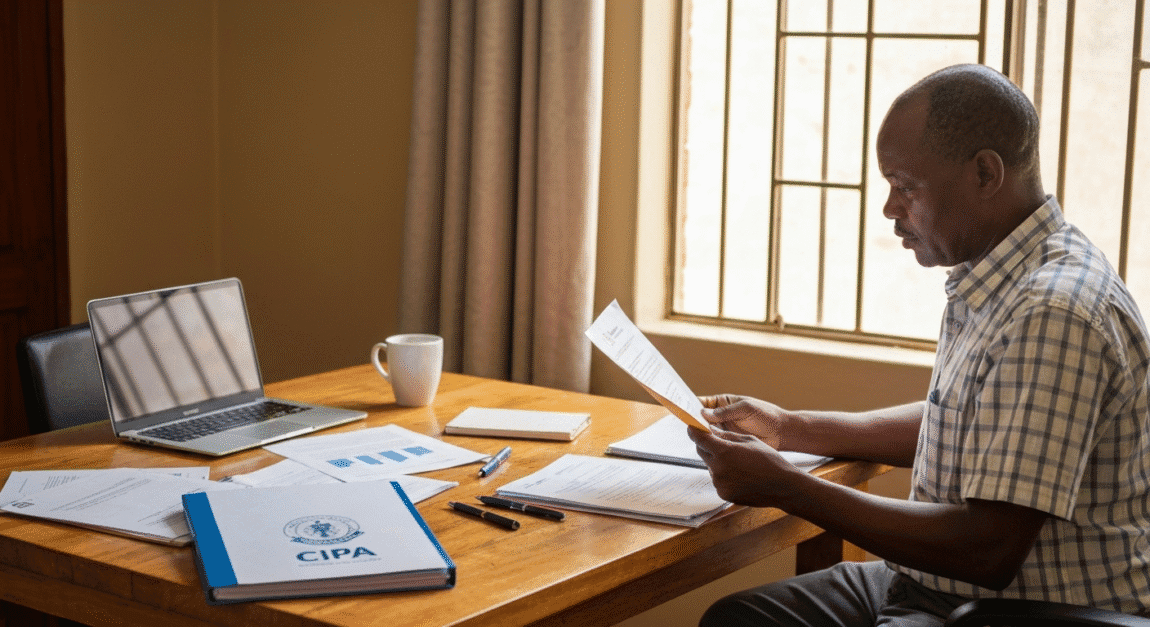
Commonly required documents:
- CIPA Documents: Certified copy of your Certificate of Incorporation and Company Extract.
- Identity Documents: Certified copies of Omang for citizens or Passports for non-citizens (directors/shareholders).
- Lease Agreement: A valid lease for your business premises or a Title Deed if you own the property.
- Zoning Certificate: Proof from the Physical Planning department that the location is zoned for business use.
- Tax Clearance Certificate: A valid certificate from BURS. Learn how to get your Tax Clearance here.
- Health & Fire Reports: For food-related or high-risk businesses, you must pass inspections first.
How Much Does a Trading License Cost in Botswana?
The trading license Botswana cost varies depending on the type of business and the specific council. While the Trade Act of 2019 simplified many fees, you can generally expect the following ranges:
| License Type | Estimated Annual Fee (BWP) |
|---|---|
| General Dealer / Small Retail | P500 – P1,000 |
| Hairdresser / Barber / Salon | P200 – P500 |
| Wholesale | P1,500 – P3,000 |
| Workshop / Industrial | P1,000 – P2,000 |
Note: These fees are subject to change by the Ministry of Investment, Trade and Industry (MITI). Always confirm the exact amount with your specific council cashier.
Step-by-Step Guide to the Application Process
Step 1: Secure Your Business Premises
Before applying, you must have a physical location. Avoid signing long-term leases until you verify the zoning with the local council. If you plan to run a home-based business, you must apply for a “Change of Land Use” or a specific home-occupation permit, which can be a lengthy process.
Step 2: Submit Your Application
You can apply in two ways:
- In-Person: Visit the Commercial Office at your local Town or District Council. Fill out Form 1 and attach your documents.
- Online: Use the Tokafatso ya Botshelo jwa me portal. This is the government’s digital system designed to speed up trade licensing.
Step 3: Site Inspection
After submission, the council will schedule an inspection. Officers from Environmental Health, Physical Planning, and sometimes Building Control or Fire Safety will visit. They check for sanitation, proper ventilation, fire extinguishers, and compliance with the building plan.
Step 4: Approval and Payment
Once the inspectors give the green light, your application is reviewed by the Licensing Committee. If approved, you will be notified to pay the license fee. Most councils accept debit cards (swiping), cash, or bank transfers (EFT). Some are beginning to integrate mobile payments like Orange Money for smaller fees.
Renewal of Trading License
A trading license is typically valid for 12 months. You must renew it annually to avoid penalties. In Botswana, the peak renewal season is often between January and March, though it technically depends on your issuance date.
- Late Fees: Failure to renew on time can result in a penalty (often 10% to 25% of the license fee per month of delay).
- Required for Renewal: You will usually need your original license, a fresh Tax Clearance, and proof that your business operations haven’t changed.
If you ever decide to close your shop, make sure to follow the process to deregister or close your business profile to avoid accruing back-dated fees.
Common Pitfalls and Pro-Tips
- Check Zoning First: Do not pay rent for a space in a residential area expecting to get a hardware store license. The council will reject it unless it is a designated commercial plot.
- Keep Your Tax File Clean: You cannot get a license without a Tax Clearance Certificate. Ensure you file your BURS returns on time.
- Signage: Once you have your license, you may need a separate Signage Permit to put up a billboard or large sign outside your shop.
Conclusion
Getting your trading license in Botswana is a mark of a professional, compliant business. It protects you from legal shutdowns and opens doors to growth opportunities. Once your license is in hand, the next step is making sure customers can find you.
Ready to get discovered? Add your business to Lephutshi today to boost your local visibility. If you need help building a professional online presence, contact Lephutshi Developers for expert SEO and website design. For those looking to master new skills, explore local courses on Dithutong.
Recommended Resources
- Tokafatso ya Botshelo jwa me – Apply Online
- Official Government Guide: Sale of Goods and Services License
- Step-by-Step Guide to Starting a Business in Botswana
- Explore More Botswana Business Blogs
Frequently Asked Questions (FAQ)
1. How long does it take to get a trading license in Botswana?
On average, it takes between 5 to 14 working days, depending on how quickly the council can conduct site inspections and how complete your documentation is.
2. Can I run a business from home without a license?
Technically, no. Every commercial activity requires a permit. You must apply for a home-based business license, and the council will check if your activity disturbs neighbors (e.g., loud noise or heavy traffic).
3. What is the difference between a Trade License and a Liquor License?
A Trade License covers general goods and services. A Liquor License is governed by a separate Act and has much stricter rules regarding location (distance from schools/churches) and operating hours.
4. Do I need a license for an online store in Botswana?
Currently, Botswana is updating its digital trade laws. However, if you have a physical warehouse or office where you keep stock, you still need a trading license for that premises.