
In today’s rapidly evolving market, sustainable practices for businesses are more than just a trend; they are essential for long-term resilience and growth. For SMEs in Botswana, embracing eco-friendly initiatives is a practical way to reduce operating costs while staying competitive in a world that increasingly values environmental responsibility.
Whether you are running a small shop in Gaborone or a manufacturing unit in Francistown, integrating green methods can transform your bottom line. This guide explores actionable steps to implement sustainability in your local operations.
Benefits of Sustainable Operations for Botswana SMEs
Implementing sustainable business practices offers a multitude of advantages, from immediate financial savings to an enhanced brand reputation. In Botswana, local entrepreneurs can tap into specific benefits by integrating greener methods into their daily workflows.
1. Financial Savings and Resource Efficiency
The most immediate benefit is cost reduction. Energy-saving measures, such as switching to LED lighting, can reduce electricity bills by up to 80% compared to traditional bulbs. By investing in energy efficiency, businesses free up valuable capital that can be reinvested into scaling operations.

2. Boosting Brand Image and Market Appeal
Consumers in Botswana and across the globe are increasingly favoring businesses that demonstrate a commitment to social and environmental impact. By showcasing green logistics and carbon footprint reduction efforts, SMEs can improve their brand image and win over eco-conscious corporate clients.
Practical Sustainable Practices to Adopt Today
Adopting sustainable practices does not have to happen all at once. Small, incremental changes often yield the best results for growing businesses. Here is how you can incorporate these strategies effectively in a local context.
Energy Efficiency and Renewable Energy
Switching to Solar Power
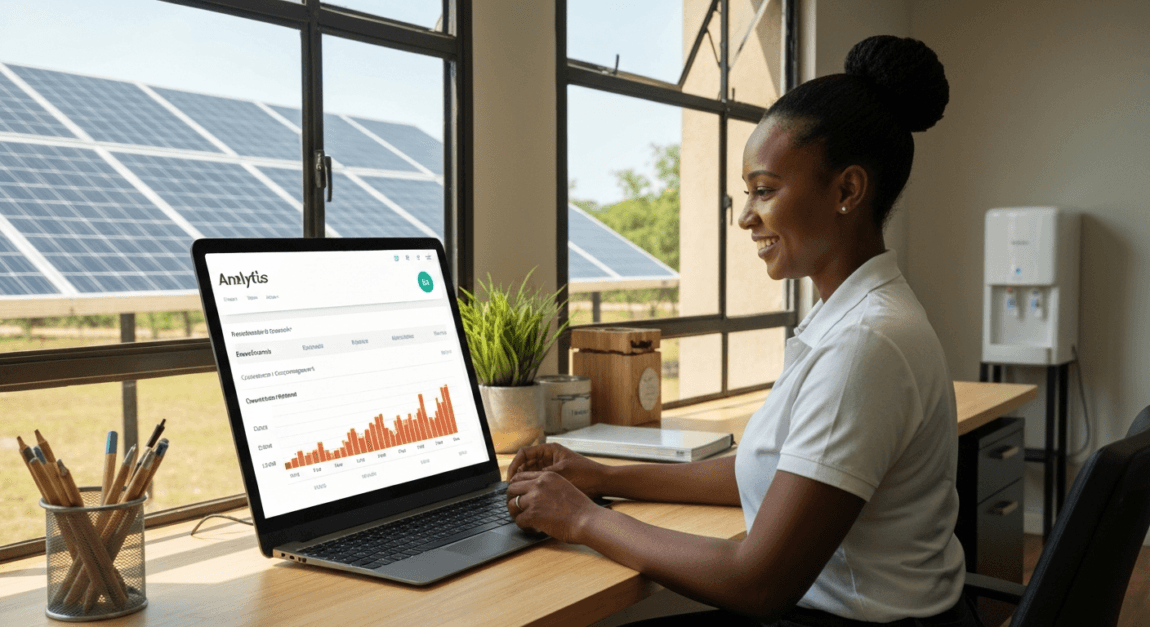
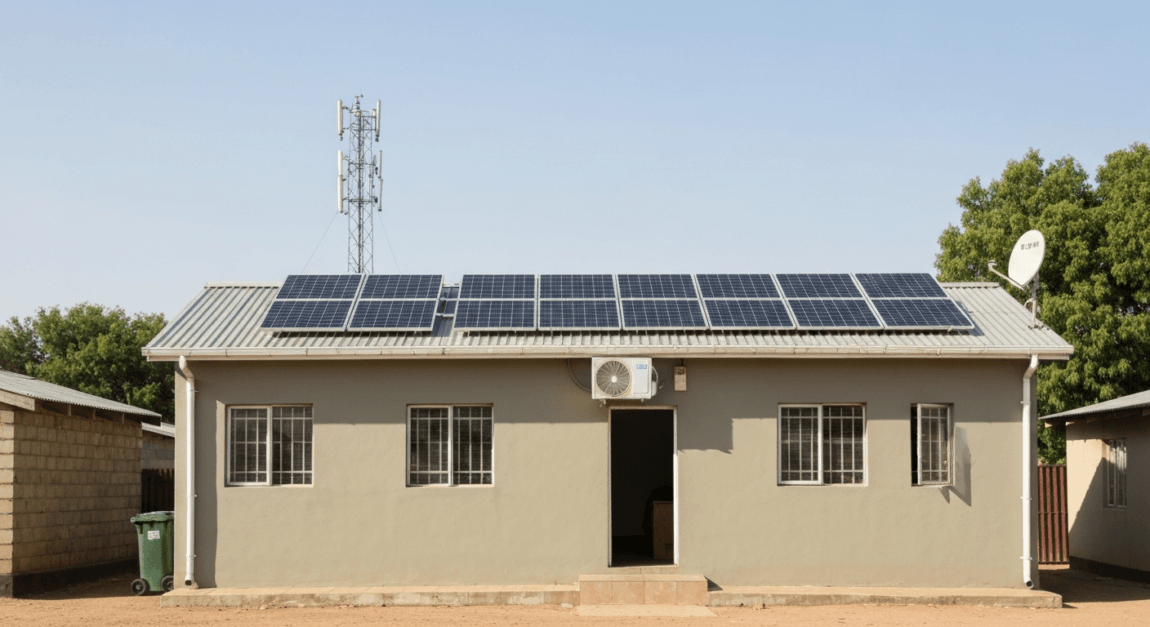
Given Botswana’s abundant sunshine, solar power is one of the most viable sustainable practices for businesses. While the initial setup for a small office might range from P20,000 to P50,000 depending on capacity, the long-term protection against tariff hikes is invaluable. If you are interested in this sector, consider our Solar Energy Business Plan.
Upgrading to Energy-Efficient Equipment
Beyond lighting, look at your air conditioning and refrigeration. Modern, Inverter-technology cooling units use significantly less power. These upgrades provide a quick return on investment (ROI) by slashing monthly utility expenses.
Waste Reduction and Recycling Programs
Implementing the 7 R’s
To move toward zero-waste, businesses should follow the 7 R’s of sustainability: Rethink, Refuse, Reduce, Repurpose, Reuse, Recycle, and Rot. For example, replacing single-use plastics in the office kitchen with reusable glass or ceramic alternatives is a simple first step.
Partnering with Local Recyclers
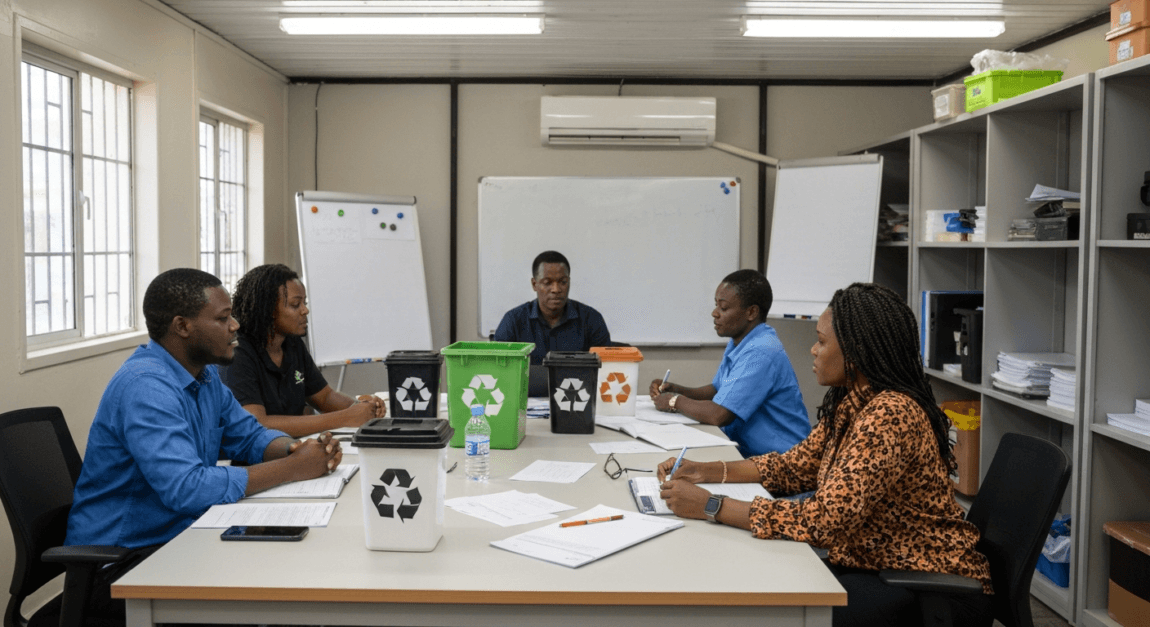
Effective recycling involves more than just a separate bin. Partner with local waste management organizations or specialized startups to ensure your paper, plastic, and e-waste are handled correctly. You can even explore starting your own venture with our recycling business guide.
Sustainable Sourcing and Supply Chain
Green Procurement Tactics
Look for local suppliers who offer eco-friendly products. Choosing a supplier based in the same town reduces the carbon footprint of transport and supports the local economy. This is a core part of green business thinking.
Collaborative Supplier Standards
Work with your suppliers to reduce unnecessary packaging. If you are a retailer, encourage your suppliers to use reusable crates instead of disposable cardboard boxes where possible.
CSR and Employee Engagement
Building a Green Culture
Sustainability works best when your team is involved. Simple initiatives like “switch-off Friday” or internal workshops on environmental responsibility can foster a strong workforce culture. Consider rewarding employees who suggest innovative ways to save resources.
Local Corporate Social Responsibility (CSR)
In Botswana, companies like FNB demonstrate how sustainability can be integrated into financial frameworks. Their commitment to social and environmental goals serves as a benchmark for smaller businesses. You can view their framework here.
Environmental Management and Certification
An Environmental Management System (EMS) helps you organize your sustainability efforts, ensuring they are measurable and consistent.
Adopting ISO 14001 Standards
ISO 14001 is the international standard for environmental management. For a Botswana SME, getting certified through the Botswana Bureau of Standards (BOBS) or other accredited bodies can open doors to international tenders and large-scale corporate contracts. Learn more about green certifications in Botswana.
Measurement Tools
You cannot manage what you do not measure. Use carbon calculators or utility tracking software to monitor your energy and water usage. Organizations like LECHA Energy provide local insights into energy audits. Explore their tools here.
Local Reality Check: Sustainability in Botswana
- Getting Paid: Transitioning to digital payments like Orange Money, MyZaka, or bank transfers reduces the need for paper receipts and physical cash handling transport.
- Logistics: For deliveries, consider route optimization to save fuel or use Poso Botswana for consolidated shipping to remote areas.
- Compliance: Ensure that any waste disposal practices comply with local council health and environmental by-laws.
Conclusion
Adopting sustainable practices for businesses is no longer an optional luxury—it is a strategic necessity. From saving money on electricity to building a brand that the community trusts, the benefits are clear. Start small, measure your progress, and watch your business grow responsibly.
Ready to boost your visibility? Add your business to Lephutshi to be discovered by eco-conscious customers. For professional help with your digital presence, visit Lephutshi Developers or learn new business skills at Dithutong.
Recommended Reading
- Beyond Sustainability – Botswana Stock Exchange
- Future Trends in Sustainable Business (Botswana)
- Renewable Energy Opportunities in Botswana
Frequently Asked Questions
What are examples of sustainable business practices?
Common examples include using energy-efficient LED lighting, installing solar panels, reducing single-use plastics, implementing recycling programs, and choosing local suppliers to reduce transport emissions.
How do sustainable practices save money?
Sustainability reduces waste and improves efficiency. For example, lowering electricity consumption directly reduces utility bills, while waste reduction lowers disposal fees and material costs.
Is solar energy worth it for a small business in Botswana?
Yes. With high electricity tariffs and abundant sun, solar systems usually pay for themselves within a few years through savings on monthly bills, especially for businesses operating during daylight hours.
What are the 7 R’s of sustainability?
The 7 R’s are Rethink, Refuse, Reduce, Repurpose, Reuse, Recycle, and Rot. They provide a framework for businesses to minimize their environmental impact.