


Using hydroponics and irrigation systems for small farms is one of the most effective ways for Botswana entrepreneurs to beat the challenges of heat and water scarcity. By moving away from traditional soil farming, you can grow high-quality produce year-round, even in urban areas like Gaborone or Francistown. This guide explores how these technologies work, what they cost, and how you can start your own sustainable agri-business.
Why Hydroponics and Irrigation Matter for Botswana Small Farms
In Botswana, water is a precious resource. Traditional flood or overhead irrigation often loses too much water to evaporation. Modern hydroponics and irrigation systems for small farms solve this by delivering water and nutrients directly to the plant roots. This approach is not just for large commercial operations; it is a perfect profitable home-based business idea for those with limited space.

Hydroponics is a method of growing plants without soil, using mineral nutrient solutions in a water solvent. For Botswana’s climate, this means you can control the environment better, protecting your crops from the harsh sun and pests. When combined with organic farming practices, you can produce premium vegetables that fetch higher prices at local retailers.
The 6 Types of Hydroponic Systems Explained
Before investing, it is crucial to understand which system fits your budget and skill level. Here are the six primary types of hydroponics used globally:
- Wick System: The simplest, passive system where nutrients are drawn into the growing medium via a wick.
- Deep Water Culture (DWC): Roots are submerged in aerated nutrient water. Great for leafy greens.
- Nutrient Film Technique (NFT): A constant flow of nutrient solution runs over the roots. Common for commercial lettuce production.
- Ebb and Flow (Flood and Drain): The grow tray is periodically flooded with solution and then drained back into a reservoir.
- Aeroponics: Roots hang in the air and are misted with nutrient solution. This is high-tech and water-efficient but sensitive to power cuts.
- Drip System: A timer controlled pump drips nutrient solution onto the base of each plant.
Choosing the Best System for Botswana
For most local SMEs and side hustlers, the Drip System or NFT are the most practical. They are easier to scale and manage during our hot summers. Strategic planning is vital; you might want to start small in your backyard before moving to a larger plot.

Drip Irrigation: A Low-Cost Alternative for Soil Farming
If you prefer to keep your crops in the ground but want to save water, drip irrigation is the answer. This system uses a network of valves, pipes, and emitters to drip water slowly to the roots of plants. In Botswana, many farmers use drip kits from local suppliers like Flotek to manage their horticulture projects.
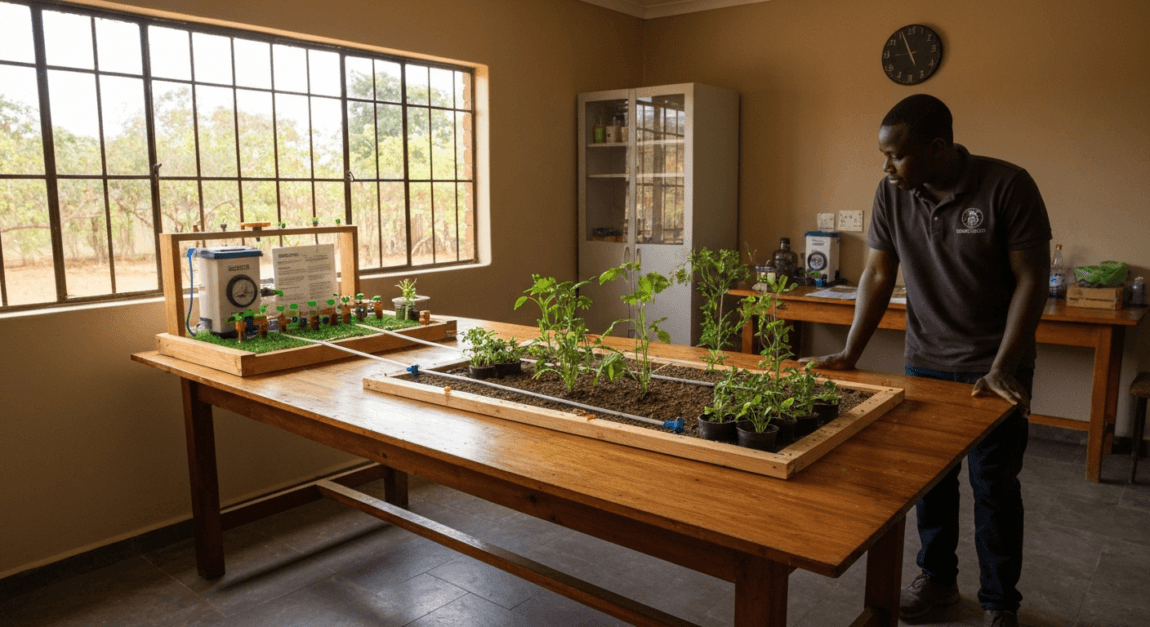
Setting up drip irrigation involves laying out lateral lines along your rows of crops. It works best for tomatoes, peppers, and watermelons. By reducing evaporation, you ensure that every drop of water counts, which is essential if you are paying for Water Utilities Corporation (WUC) rates or pumping from a borehole.
Best Crops to Grow on Small Farms in Botswana
Not all crops are equal when it comes to profitability. In Botswana, you should focus on high-demand vegetables that have a short growth cycle. This allows for faster turnover and better cash flow.
- Leafy Greens: Spinach, lettuce, and rape are always in demand at local markets and supermarkets.
- Herbs: Basil, mint, and parsley are high-value and take up very little space.
- Vine Crops: English cucumbers and tomatoes thrive in hydroponic NFT or drip systems.
- Fruits: Strawberries are becoming a popular winning business idea because they can be grown vertically to save space.
Before planting, check the local market. Visit your nearest Choppies, Spar, or Sefalana to see what produce is being imported—that is your opportunity to supply locally grown alternatives.
Local Reality Check: Startup Costs and Operations
Starting a hydroponic farm requires an initial investment. For a small backyard setup, you might spend between P5,000 and P15,000 on PVC pipes, pumps, reservoirs, and shade nets. A larger commercial-grade greenhouse could cost P50,000 or more. If you need help with capital, research navigating CEDA loans or other funding institutions in Botswana.
Practical Tips for Success:
- Get Paid: Most small farmers sell through WhatsApp groups or local markets. Accept payments via Orange Money, eWallet, or MyZaka to make it easy for customers.
- Logistics: Use local taxis or small delivery vans for in-town delivery. For regional orders, Poso Botswana or bus parcel services are affordable options.
- Marketing: List your farm on the Lephutshi business directory so local restaurants and individuals can find you easily.
- Compliance: While small backyard farms are often informal, if you plan to sell to major retailers, you may need to register your company and look into food handling permits from your local council.
Avoiding Common Pitfalls in Hydroponics
Many new farmers fail because they underestimate the maintenance required. Since the plants rely entirely on the water system, a power outage can be fatal if you don’t have a backup. Consider a small solar pump if you are in an area with frequent BPC load shedding. Check out this solar energy business plan for inspiration on integrating renewable energy.
Additionally, monitor your pH levels and nutrient balance daily. If the water becomes too hot (above 28°C), the roots can rot. Using shade netting (40% to 80% shade) is non-negotiable in the Botswana summer.
Conclusion
Hydroponics and irrigation systems for small farms offer a path toward food security and financial independence in Botswana. By choosing the right system, selecting high-demand crops, and managing your water resources wisely, you can build a resilient agri-business. Whether you are a retiree looking for a stable income or a young entrepreneur starting a student side-hustle, the future of farming is smart and sustainable.
Ready to grow your business visibility? Add your farm to Lephutshi today. For professional website help, visit Lephutshi Developers, and to learn more skills, check out Dithutong.
Recommended Reading
- How to Start an Organic Farming Business in Botswana
- Top Profitable Small Business Ideas in Botswana
- Flotek Botswana: Drip Irrigation Solutions
- How to Write a Business Plan for a Botswana Farm
- Climate-Resilient Technology for Botswana Horticulture (PDF)
FAQ
- What are the 6 types of hydroponics?
The six main types are the Wick system, Deep Water Culture (DWC), Nutrient Film Technique (NFT), Ebb and Flow, Aeroponics, and Drip systems. - Is hydroponic farming profitable in Botswana?
Yes, it can be very profitable due to the high demand for fresh produce and the ability to grow crops out of season. However, you must manage high initial electricity and setup costs. - Which crop is best for hydroponic farming in Botswana?
Leafy greens (lettuce, spinach), herbs (basil), and English cucumbers are the most successful and profitable crops for local hydroponic farmers. - How much does it cost to start a small hydroponic farm?
A basic backyard setup can start from P5,000, while a professional small-scale greenhouse setup typically ranges between P15,000 and P50,000. - What are the main disadvantages of hydroponics?
The main challenges are the high initial cost, the need for constant monitoring of water pH/nutrients, and the risk of crop loss during power outages. - Do I need a license to sell vegetables in Botswana?
For small-scale backyard selling, it is often informal. However, to sell to supermarkets or government institutions, you will need a trading license and a food handling certificate.