

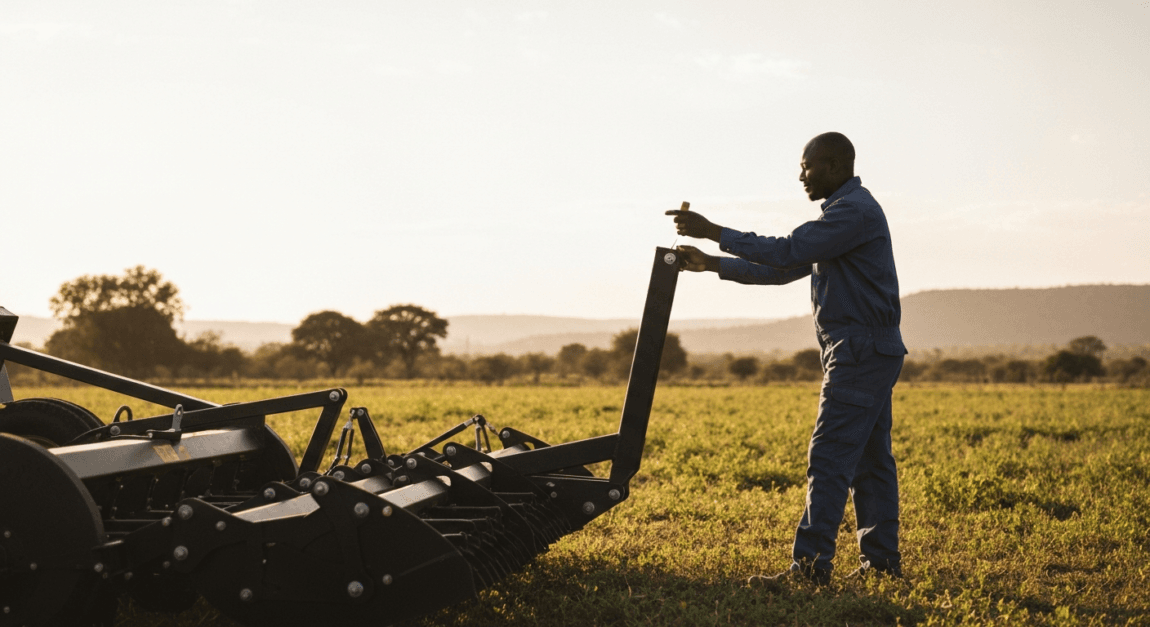
Maintaining farm machinery is crucial for any agribusiness in Botswana to ensure longevity, reduce operational costs, and enhance safety. In our semi-arid climate, factors like dust, heat, and heavy workloads can take a toll on equipment. This guide provides practical steps and a structured maintenance of farm machinery checklist to help local entrepreneurs and small-scale farmers keep their tractors and implements in peak condition.
Why Maintenance of Farm Machinery is Critical for Botswana Farmers
A well-maintained piece of machinery is a vital component in the success of agricultural enterprises. In Botswana, where spare parts for specialized equipment might take time to arrive from Gaborone or South Africa, prevention is always cheaper than a mid-season breakdown.
Extending Equipment Life in Harsh Conditions
The Kalahari sands and high temperatures are tough on engines and hydraulic systems. Regular maintenance practices significantly extend the life of farm equipment, allowing businesses to capitalize on their investment. Simple actions such as proper lubrication, air filter cleaning (essential in dusty areas), and following a detailed maintenance schedule play a vital role.
Reducing Downtime and Opportunity Costs
When a tractor breaks down during the plowing season, every hour lost is money lost. Reducing the risks of sudden mechanical failures helps decrease the downtime costs that can disrupt business operations. By covering routine checks and promptly addressing any signs of wear, farms can keep machinery running smoothly during peak times.
Ensuring Safety and Operational Efficiency
Ensuring all parts—especially brakes and steering—are functioning correctly reduces safety hazards for workers. For those looking to scale their operations, implementing lean management in your maintenance routine can boost overall productivity.
Daily Maintenance Checklist: Before You Start the Engine
Daily maintenance checks are the cornerstone of effective farm machinery care. Spending 15 minutes every morning can catch issues before they escalate into costly repairs that might require emergency business loans.
- Fluid Levels: Check engine oil, coolant, and hydraulic fluid. In Botswana’s heat, coolant levels are especially critical.
- Air Filters: Tap out dust or use compressed air. A clogged filter kills fuel efficiency.
- Tires and Wheels: Look for thorns, cracks, or low pressure, especially if working in areas with mokgalo or mongana bushes.
- Grease Points: Apply grease to moving joints and bearings to prevent metal-on-metal wear.
- Leaks: Look under the machine for fresh puddles of oil or coolant.
Essential Tools for Quick Inspections
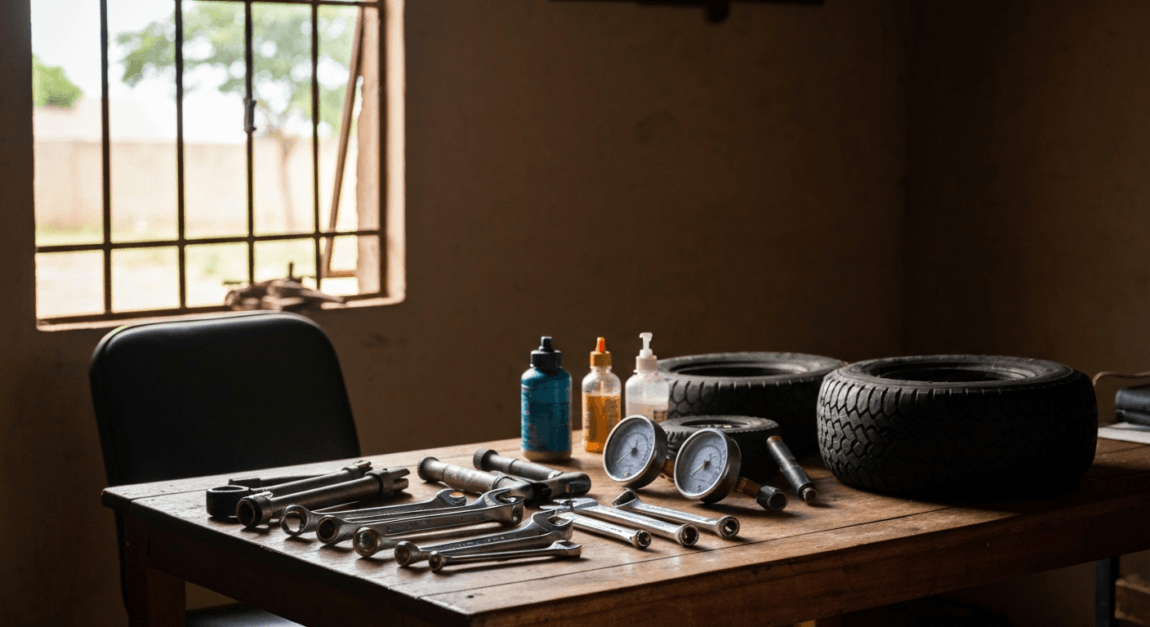
Equip yourself with a basic kit: adjustable wrenches, oil pressure gauges, tire pressure gauges, and a grease gun. Having these on the farm saves you a trip to the nearest village or town.
Weekly and Monthly Servicing
Beyond daily walk-arounds, deeper inspections ensure that internal systems remain healthy. This is a good time to check your risk management plans for any equipment-related threats.
Key Areas to Service
- Battery Health: Check for corrosion on terminals. High heat can cause battery fluid to evaporate faster.
- Belt Tension: Ensure fan belts and alternator belts aren’t slipping or cracked.
- Fuel Filters: Drain the water separator. Contaminated fuel can destroy injectors.
- Implement Check: Inspect plow discs, planter units, and sprayer nozzles for clogs or dullness.
Creating a Service Schedule
Create a detailed maintenance schedule based on operating hours (e.g., every 50, 100, or 250 hours). Digital tools or even a simple calendar in the farm office can help Botswana SMEs track these intervals effectively.

Off-Season Storage and Protection
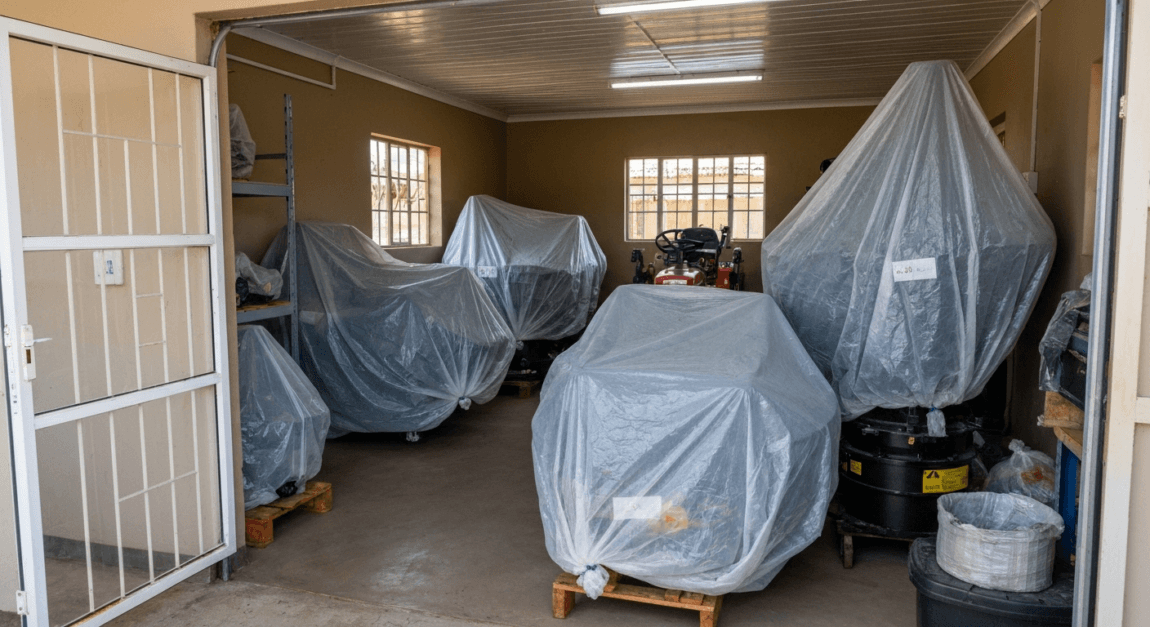
In Botswana, machinery often sits idle during the dry winter months. Proper storage protects your investment from the elements and pests (like rodents that chew on wiring).
Storage Best Practices in Botswana
- Clean Thoroughly: Remove all soil and plant debris. Soil holds moisture which causes rust.
- Indoor Storage: If possible, park machinery under a shed to avoid sun damage to tires and hoses.
- Rust Prevention: Apply anti-rust coatings or a thin layer of oil to exposed metal parts of implements.
- Battery Care: Disconnect batteries or use a trickle charger if the machine will sit for months.
Common Tractor and Implement Failures
Being aware of common failures allows you to identify issues before they cause significant disruptions to your organic farming or commercial operations.
Signs of Wear and Tear
Watch for black or blue exhaust smoke (engine issues), grinding noises during gear shifts, or sluggish hydraulic response. If your tractor is consuming more diesel than usual, it’s often a sign that maintenance is overdue.
Logistics for Parts and Repairs
If you need parts, many local dealers are located in Gaborone, Francistown, or Palapye. For farmers in remote areas, services like Poso Botswana or local courier buses can be used to transport smaller parts. For urgent repairs, many mobile mechanics accept Orange Money or eWallet for their call-out fees.
Maintenance Log Template
Documentation is key for resale value and professional management. A well-documented maintenance history makes your business more attractive if you ever decide to pitch your business plan to investors.
Utilize our Maintenance Log Template to streamline your processes and keep a record of every oil change and part replacement.
Conclusion: Lephutshi’s Role in Supporting Local Farmers
A systematic maintenance of farm machinery plan prevents breakdowns and ensures smooth agricultural operations in Botswana. By taking care of your equipment, you manage costs, enhance safety, and build a more resilient agribusiness.
Ready to grow your business visibility in Botswana? Add your business to Lephutshi. Whether you are a tractor mechanic, a parts supplier, or a commercial farmer, getting discovered is the first step to growth. Need a professional website to showcase your agricultural services? Visit Lephutshi Developers. For those looking to learn more technical skills, explore Dithutong today.
Recommended Reading
- Risk Management & Business Continuity for Botswana SMEs
- Starting an Organic Farming Business in Botswana
- Expert Tips from Feed Centre Botswana
- Understanding the Botswana Transport & Logistics Industry
- General Tractor Maintenance Guide
FAQ
- Why is maintenance of farm machinery important in Botswana?
In Botswana’s harsh climate, maintenance prevents premature engine wear due to dust and overheating. It also reduces downtime during short, critical planting seasons. - What are the most common implements used with a tractor?
Typical implements include moldboard plows, disc harrows, planters, and boom sprayers. Each requires its own maintenance, such as checking for worn discs or clogged nozzles. - What are the 4 main systems of a tractor engine to monitor?
The four main systems are the fuel system (filters/injectors), cooling system (radiator/coolant), lubrication system (oil/filters), and electrical system (battery/alternator). - How does dust affect my farm machinery?
Dust is a major enemy in Botswana. It can clog air filters, leading to high fuel consumption, and act as an abrasive in moving parts if they are not properly greased. - How should I pay for mobile mechanic services in rural areas?
Most mobile mechanics in Botswana prefer cash or mobile money transfers like Orange Money, MyZaka, or FNB eWallet for convenience and immediate payment.