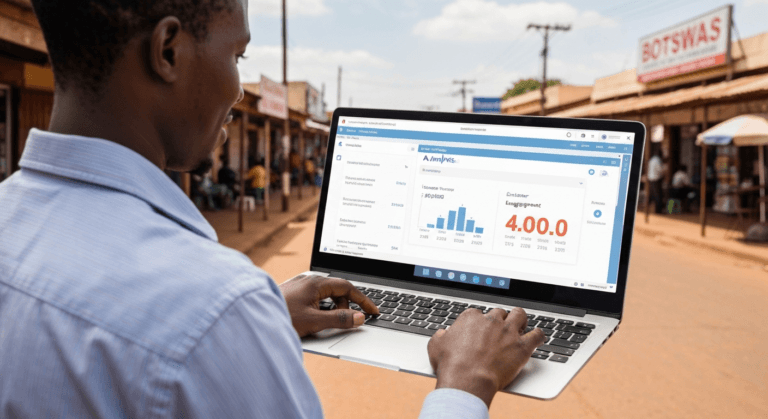


Creating detailed financial projections is the most critical part of any business plan, especially if you are seeking funding from institutions like CEDA, NDB, or commercial banks. These projections do more than just show numbers; they demonstrate that your business idea is financially viable and that you understand the costs of operating in the Botswana market.
In this guide, we will break down how to create realistic financial projections, what statements you need, and the local factors you must consider to ensure your business plan stands out to investors and lenders.
Why Realistic Financial Projections Matter in Botswana
Financial projections allow you to visualize the potential success of your business before you spend a single Pula. In Botswana, where the market size is specific and competition can be stiff, projections confirm the feasibility of your business model.
Demonstrating Viability to Funding Institutions
Lenders like CEDA or private investors need assurance that your business can generate enough cash to pay back loans and sustain operations. Detailed projections allow them to gauge risks versus rewards. If your projections are too optimistic—for example, claiming you will capture 80% of Gaborone’s market in month one—you may lose credibility immediately.
Planning Daily Business Operations
Beyond attracting investors, financial planning is important for guiding your daily decisions. From deciding when to hire your first employee to choosing a marketing budget for social media ads, accurate forecasts ensure you are prepared for both the dry months and growth periods.
The 5 Essential Components of Financial Projections
To build a professional financial section, you need to include these key components. Each one offers a different perspective on your business health.
1. Sales Forecast (Revenue Projection)
A sales forecast estimates your future revenue. This should not be a guess. It should be based on your market analysis and realistic local foot traffic or online reach. For example, if you are starting a car wash in Phakalane, how many cars can you realistically wash per day given your equipment?

2. Operating Expense Budget
Your expense budget outlines what it costs to stay open. In Botswana, remember to account for:
- Fixed Costs: Rent for office/shop space, CIPA annual return fees, insurance, and salaries.
- Variable Costs: Electricity (BPC), water (WUC), raw materials, and delivery costs (e.g., using local couriers or taxi services).
- Compliance: Costs for trading licenses or specialized permits.
3. Cash Flow Statement
The cash flow statement is the most important document for a small business. It tracks when money actually enters and leaves your bank account. In Botswana, many businesses struggle because they have “profit” on paper but no cash to pay rent because customers haven’t paid yet. Ensure you account for payment delays if you offer credit to customers.
4. Profit & Loss (Income Statement)
The P&L shows whether your business is making a profit over a specific period (usually monthly or annually). It takes your total revenue and subtracts all expenses to show your “bottom line.” This is where you see if your pricing strategy is actually working.
5. Break-Even Analysis
A break-even analysis tells you the exact moment your business stops losing money and starts making it. This is crucial for setting sales targets. If your monthly expenses are P15,000, how many units do you need to sell just to cover that cost?
Step-by-Step: How to Create Your Financial Projections
Creating projections is a process of making educated assumptions. Here is how to approach it:
Step 1: Set Your Assumptions
Write down the “why” behind your numbers. If you say you will make P20,000 in month three, explain why. Is it because you are launching a Facebook ad campaign? Or because of a seasonal peak like the festive season or Gaborone International Music Fest (GIMF)?
Step 2: Estimate Startup Costs
Include everything you need before Day 1. This includes registering your company, buying equipment, initial stock, and a “cash cushion” for the first few months of operation.
Step 3: Forecast Three Scenarios
Investors love to see that you have considered different possibilities. Create three versions of your projections:
- Conservative (Worst-case): Slow sales, high expenses.
- Realistic (Expected): What you truly expect to happen.
- Optimistic (Best-case): Rapid growth and high demand.
Local Realities: Getting Paid and Logistics
When projecting your finances, don’t forget the practical side of doing business in Botswana:
- Getting Paid: How will you collect money? If you use Orange Money, MyZaka, or eWallet, factor in the withdrawal or transaction fees. If you use card machines (POS), account for the bank’s percentage cut.
- Logistics: If you are selling goods, how much does it cost to send a parcel via Poso Botswana or a local courier to Maun or Francistown? These small costs add up and can eat your profit margins.
- Tax Compliance: Even if you are not yet registered for VAT, you should understand when you are required to do so (currently when turnover reaches P500,000 per year) and factor in potential corporate tax payments to BURS.

Tools & Templates for Financial Projections
You don’t need to be a chartered accountant to start. There are several business planning tools available:
- Microsoft Excel/Google Sheets: The most flexible option. Many free templates exist specifically for startups.
- SCORE Templates: Helpful for structured financial tables.
- Local Accountants: If you are applying for a large CEDA loan, it is often worth paying a local consultant or accountant to review your numbers for accuracy.
Common Mistakes to Avoid
- Underestimating Expenses: Many entrepreneurs forget small things like data bundles, bank charges, or the cost of the tax clearance certificate process.
- Over-optimistic Sales: It takes time for people to find your business. Be conservative for the first six months.
- Ignoring Seasonality: Some businesses in Botswana peak during the holidays or harvest seasons and slow down during others. Your projections should reflect this.
Conclusion
Financial projections are the “proof” in your business plan. They show that you have moved beyond an idea and have a concrete strategy for making money. By being realistic and considering local Botswana costs, you build trust with stakeholders and set yourself up for long-term success.
Ready to get your business discovered? Add your business to Botswana’s local directory today. If you need help building an online presence that matches your professional business plan, contact Lephutshi Developers.
Recommended Reading
- The Ultimate Business Plan Guide for Botswana Entrepreneurs
- How to Apply for CEDA Loans: A Practical Guide
- Market Analysis in a Business Plan for Botswana
- A Simple Overview of Business Taxes in Botswana
Frequently Asked Questions
- How do I create financial projections for a business plan?
Start by forecasting sales and expenses, ensure you include a cash flow statement, and use realistic assumptions based on Botswana market research. - What financial statements should a business plan include?
Essential statements include the sales forecast, operating expense budget, cash flow statement, profit & loss (income statement), and break-even analysis. - How far out should financial projections go?
Most local lenders like CEDA require a 3 to 5-year projection. The first year should be detailed month-by-month, while subsequent years can be annual summaries. - What is a break-even analysis in a business plan?
A break-even analysis determines the volume of sales needed to cover all your costs. It is the point where you make zero profit but also zero loss. - Do I need an accountant to do my projections?
For small startups, you can do them yourself using templates. However, for significant funding applications, having a professional review your numbers is highly recommended to ensure compliance with BURS and lender standards.