

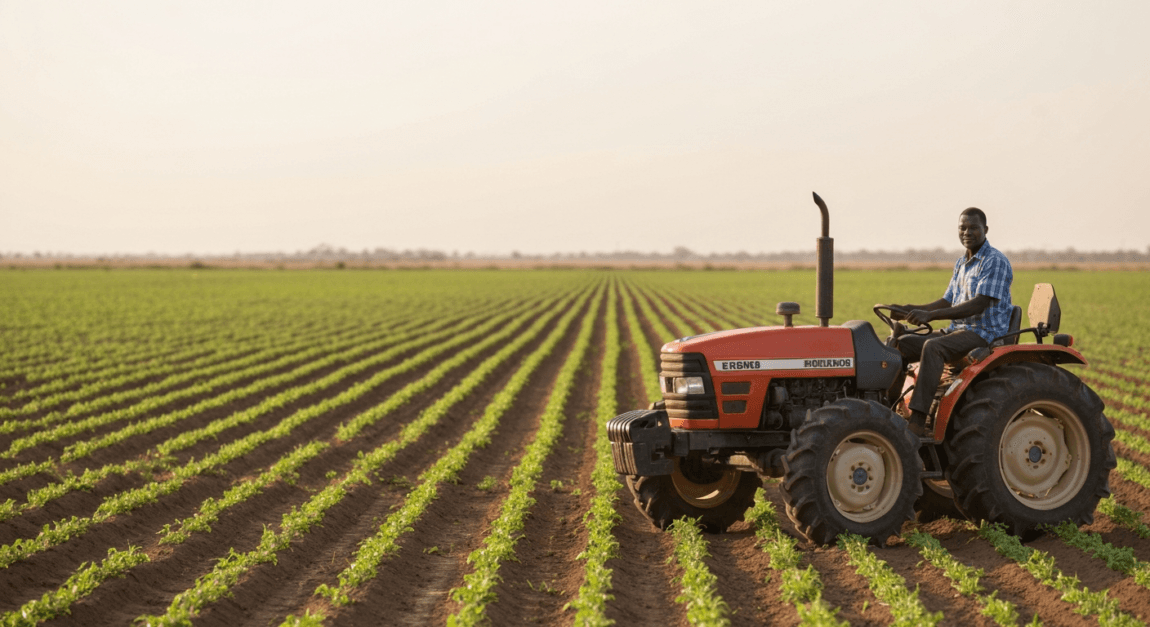
Understanding the different types of farm machinery for beginners is the first step toward transforming a small plot into a productive enterprise. In Botswana, where soil conditions can be tough and labor is often scarce, moving from a hand hoe to mechanization isn’t just about speed—it’s about survival and growth. Whether you are venturing into horticulture in Glen Valley or dryland farming in the Pandamatenga plains, the right tools determine your success.
What is Farm Machinery and Why is it Essential?
Farm machinery refers to the mechanical devices, ranging from simple hand-operated tools to complex motorized vehicles, used to perform agricultural tasks. For a beginner, mechanization means you can till more land, plant seeds more accurately, and harvest before the heat or pests ruin your crop.
The Role of Mechanization in Botswana Agriculture
In our local context, mechanization helps overcome the challenges of unpredictable rainfall and hard soils. While traditional methods have their place, modern machinery allows for “timeliness”—doing the right task at the exact right moment in the season. This is a core part of developing a winning business idea in Botswana‘s agricultural sector.
1. Land Preparation Machines
Land preparation is the most energy-intensive part of farming. In many parts of Botswana, the soil can be hard-packed, requiring sturdy equipment to break the surface and create a suitable seedbed.
Ploughs: The Primary Tillage Tool
Ploughs are used to turn over the upper layer of the soil, bringing fresh nutrients to the surface while burying weeds.
- Moldboard Ploughs: Best for deep soil inversion.
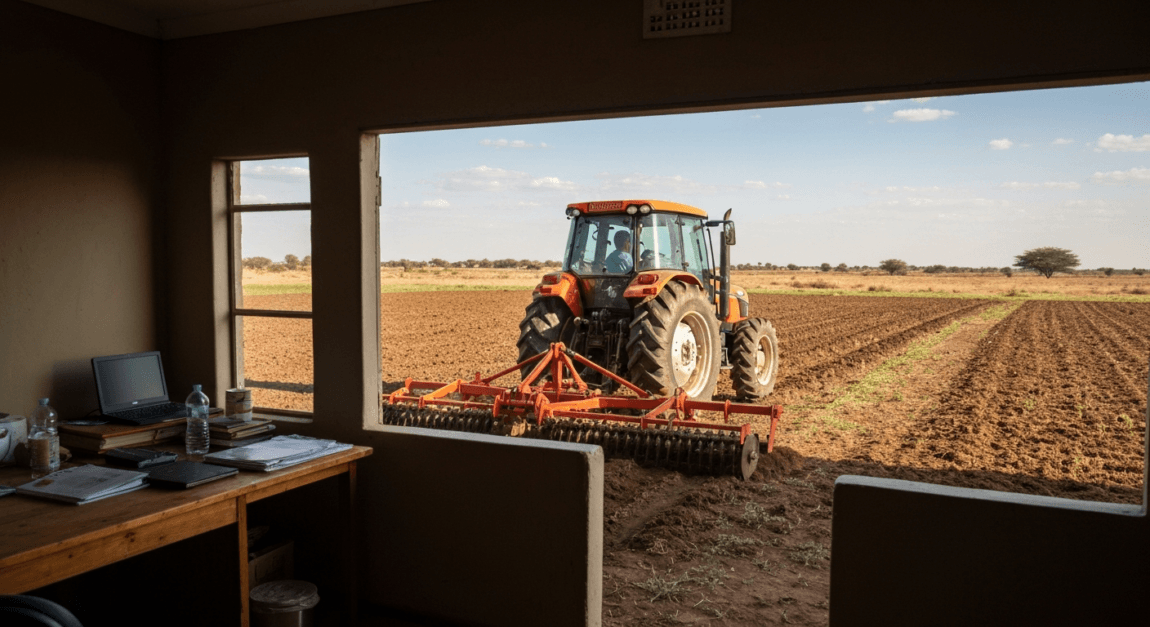
- Disc Ploughs: Highly popular in Botswana because they handle rocky or very hard ground better than moldboard versions.
Harrows: Refining the Seedbed
After ploughing, the soil is often left in large clumps. Harrows (like the disc harrow) are used to break these clumps down into a fine tilth. This ensures that when you plant, the seeds have good contact with the soil and can access moisture easily.
2. Planting and Seeding Equipment
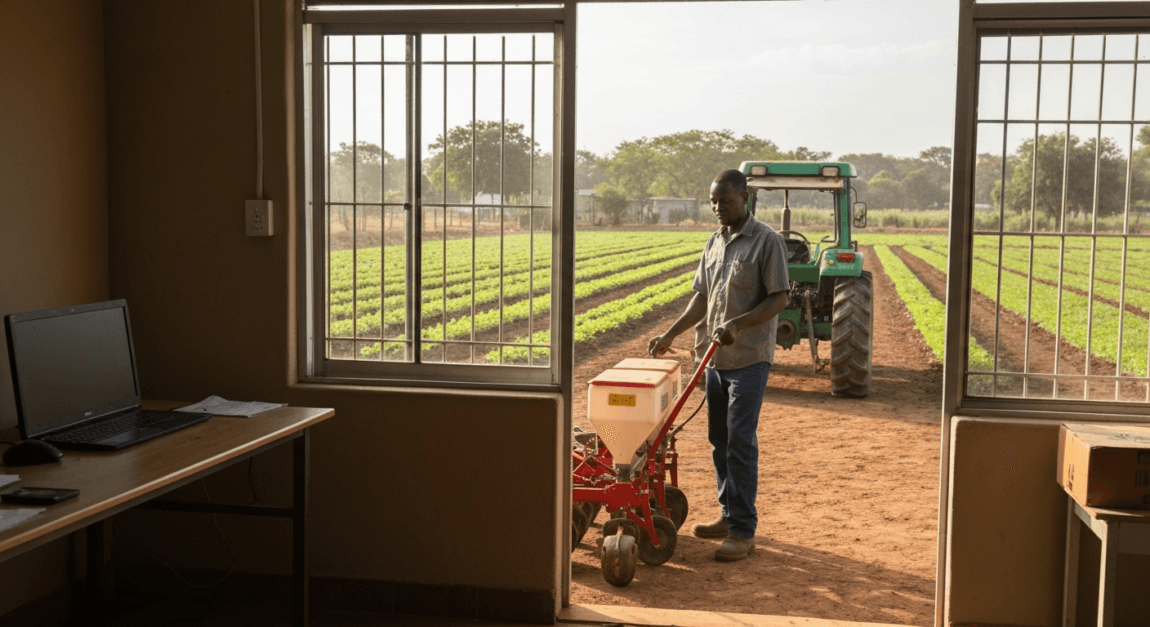
Precision is key when planting. If seeds are too deep, they won’t emerge; too shallow, and they dry out. Mechanized planters ensure every seed is placed at the same depth and spacing.
Seed Drills and Row Planters
A seed drill allows you to plant crops like wheat or sorghum in narrow rows, while row planters are typically used for maize, sunflower, or beans where wider spacing is needed. Using these machines significantly reduces seed waste compared to hand-scattering (broadcasting).
Local Reality: Small-Scale Mechanization
Many beginners in Botswana start by hiring a tractor and planter from local contractors or through government schemes. This is a cost-effective way to access high-end machinery without the massive upfront capital investment.
3. Crop Care and Maintenance Machines
Once your crops are growing, you need to protect them from pests, diseases, and weeds. This is where crop-care machinery becomes indispensable.
Sprayers: Protecting Your Investment
Sprayers are used to apply liquid fertilizers or pesticides.
- Knapsack Sprayers: Manual or battery-operated backpacks, perfect for beginners with small vegetable gardens.
- Boom Sprayers: Large tanks mounted on tractors for covering hectares of field crops quickly.
Irrigation Systems
While not always “machinery” in the traditional sense, pumps and automated irrigation systems (like drip or center pivots) are essential for year-round production in our semi-arid climate. Check out organic farming ideas for sustainable ways to manage crop health.
4. Harvesting Machinery
Harvesting by hand is slow and can lead to high “post-harvest losses” where crops rot or are eaten by birds before you can finish.
Combine Harvesters
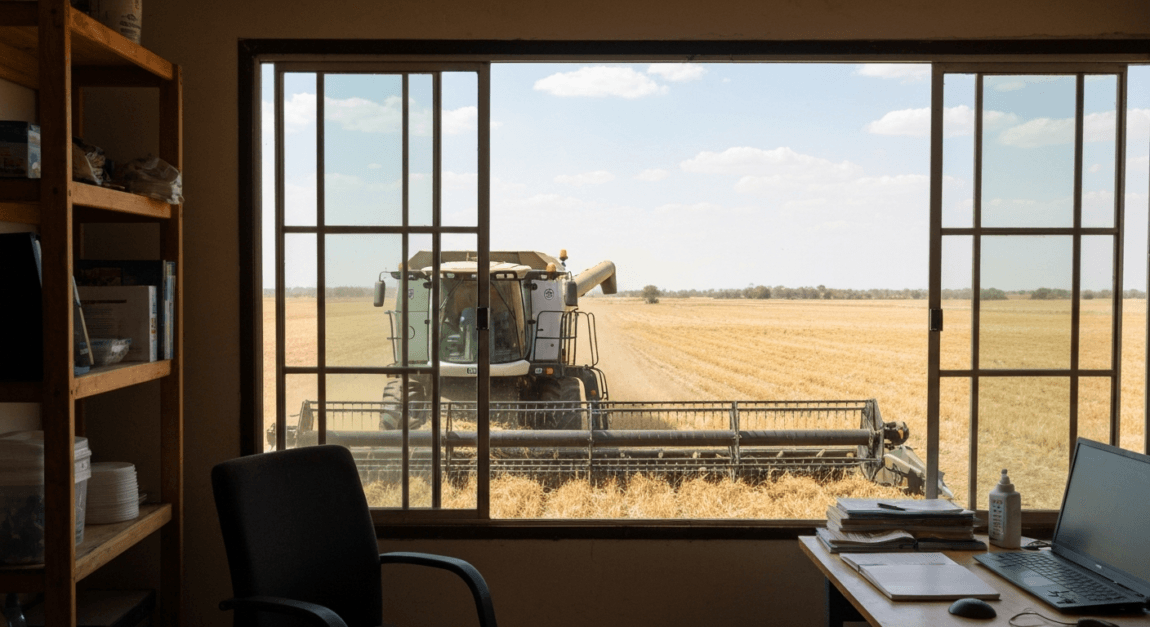
The combine harvester is a marvel of engineering that reaps, threshes, and cleans the grain in one go. In Botswana, these are common in large-scale areas like Pandamatenga. For a beginner, you might use a smaller thresher or continue to harvest by hand until your scale justifies the cost of hiring a combine.
5. The Tractor: The Ultimate Farm Workhorse
The tractor is the most versatile of all types of farm machinery for beginners. It doesn’t just pull things; it provides power via the Power Take-Off (PTO) to run other machines like pumps or sprayers.
Choosing the Right Tractor
For most beginners in Botswana, a 50hp to 75hp tractor is sufficient for general tasks. Popular brands with local parts support include Massey Ferguson, John Deere, and Landini. When buying, ensure you have access to a local mechanic who understands your specific model.
Practical Tips for Beginners: Costs and Logistics
Starting with machinery requires a plan. Here is a realistic look at how to manage this in Botswana:
- Budgeting: A used 50hp tractor might cost anywhere from BWP 80,000 to BWP 150,000 depending on condition. New ones are significantly higher. Basic attachments like a 2-disc plough can start around BWP 15,000.
- Funding: Many Botswana farmers look into navigating CEDA loans for agricultural equipment. Ensure you have a solid business plan ready.
- Maintenance: Dust and heat are the enemies of machinery. Regular oil changes and cleaning filters are mandatory in our climate.
- Payments and Spares: Most spare part shops in Gaborone, Francistown, or Palapye accept card payments and Orange Money/eWallet for convenience.
Conclusion
Investing in the right types of farm machinery for beginners can feel overwhelming, but you don’t have to buy everything at once. Start with the essentials for land preparation or consider hiring until your cash flow allows for a purchase. By embracing mechanization, you are moving toward a more professional, efficient, and profitable farming business.
Ready to connect with local machinery suppliers or services? Explore business listings on Lephutshi today. If you’re a service provider, don’t forget to add your listing to get discovered by farmers in your area.
Recommended Reading
- How to Navigate CEDA Loans for Your Botswana Business
- Starting an Organic Farming Business in Botswana
- The Ultimate Business Plan Guide for Botswana Entrepreneurs
- Botswana Ministry of Agriculture Official Website
- BQA Agriculture Qualification Template
FAQ
- What is the best farm machinery for a beginner with a small plot?
A small tractor (under 50hp) or a power tiller is often the best start. If the budget is tight, focus on high-quality hand tools and a knapsack sprayer for pest control. - Should I buy new or used farm machinery in Botswana?
Used machinery is more affordable but carries the risk of breakdowns. If you buy used, ensure common spare parts for that brand are easily available in towns like Gaborone or Francistown. - What are the main types of tractors available?
Tractors are generally classified by their horsepower (hp) and use. Common types include Utility tractors (versatile for most tasks), Row Crop tractors (for large fields), and Compact tractors (for orchards or small holdings). - How can I fund my farm machinery purchase?
In Botswana, options include CEDA (Citizen Entrepreneurial Development Agency), LEA (Local Enterprise Authority) for guidance, and commercial bank agricultural loans. Some farmers also use personal savings or “motshelo” groups. - Do I need a license to drive a tractor on the road?
Yes, in Botswana, you generally need a valid driver’s license with the appropriate tractor class (Class G) to operate machinery on public roads.