


Starting a poultry farm in Botswana is one of the most popular ways to enter the agribusiness sector. With a consistent demand for meat and eggs in local villages and urban centers like Gaborone and Francistown, poultry farming for beginners offers a realistic path to self-employment. However, success isn’t just about buying chicks; it requires a solid understanding of costs, housing, and the local Botswana market.
Understanding Poultry Farming for Beginners in Botswana
Before investing your hard-earned Pula, you need to decide which model fits your goals. In Botswana, the industry is largely divided into three categories: broilers (meat), layers (eggs), and indigenous chickens (Tswana chickens). Most beginners start with broilers because of the quick turnaround, but each has its own requirements.
The Poultry Business Models
Broiler Farming: These birds are raised specifically for meat. They grow fast and are usually ready for market in 6 to 8 weeks. This is ideal for those who need quick cash flow.
Layer Farming: These birds are kept for egg production. While they take longer to start producing (about 18-20 weeks), they provide a steady daily income once they begin laying.
Tswana/Free-range Chickens: Often overlooked, raising indigenous chickens is a great low-cost business idea. They are hardier and can be sold at a premium to customers looking for traditional taste.
Broilers vs Layers: Which Should You Choose?
Choosing between broilers and layers depends on your available capital and patience. Here is a quick comparison for the Botswana context:
| Feature | Broilers | Layers |
|---|---|---|
| Time to Income | 6-8 Weeks | 18-20 Weeks |
| Initial Cost | Lower | Higher (long rearing phase) |
| Management | Intensive feeding | Lighting & egg collection |
| Primary Market | Individuals, Butcheries | Tuckshops, Households |

Startup Costs and Budgeting in BWP
One of the biggest questions for poultry farming for beginners is: “How much do I need?” While costs vary based on scale, here is a realistic estimate for a small-scale broiler project (approx. 100-200 birds):
- Chicks: P1,200 – P2,500 (depending on supplier like Irvines or Ross Breeders).
- Feed (Starter, Grower, Finisher): P4,000 – P7,000. Feed is your biggest expense.
- Housing (Basic structure): P5,000 – P15,000 (using local materials or shade nets).
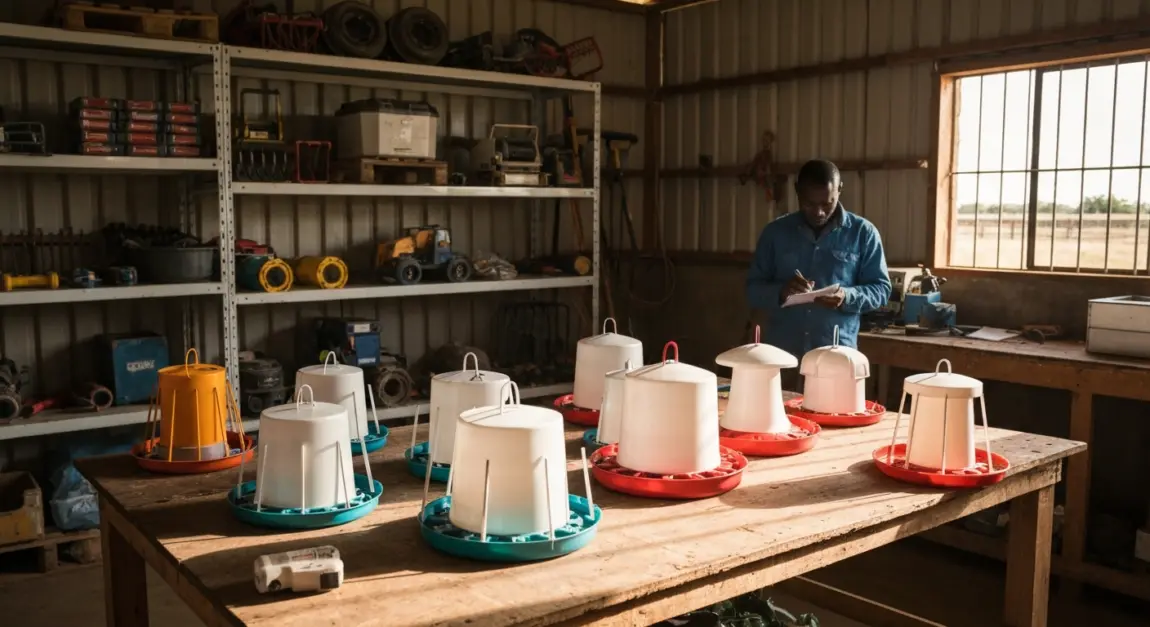
- Equipment (Feeders, Drinkers, Heat lamps): P2,000 – P4,000.
- Medication & Vaccines: P500 – P1,000.
Overall, a small-scale starter kit can range from P15,000 to P30,000. If you are looking for larger funding, you might need to write a formal business plan for institutions like CEDA.
Housing and Equipment for Local Conditions
Botswana’s climate can be harsh. Summer temperatures often exceed 35°C, and winter nights can drop below freezing. Your housing must protect your birds from these extremes.
Key Housing Requirements:
- Ventilation: Use mesh wire on the upper sides of the walls to allow air to flow, preventing heat stress.
- Orientation: Build the long side of the house facing East-West to minimize direct sunlight entering the house.
- Floor: A concrete floor is easier to clean and disinfect than a dirt floor.
- Bedding: Use wood shavings (not sawdust) to absorb moisture and keep birds warm.
Feed and Health Management
In poultry farming for beginners, feeding is 70% of your total cost. Most farmers buy commercial feed from local suppliers like Feed Centre Botswana or Sechaba. To save costs, some farmers mix their own yellow maize, but this requires a specific balance of nutrients to ensure growth.
Vaccination Schedule
Disease can wipe out your entire flock in days. Common threats in Botswana include Newcastle Disease and Gumboro. Always follow a vaccination schedule provided by your chick supplier or the local veterinary office. Make sure to have a “footbath” at the entrance of your poultry house to prevent people from bringing in germs from outside.
How to Market and Sell Your Poultry
Don’t wait until your birds are 6 weeks old to start looking for buyers. Marketing should begin the day you buy your chicks.
- Direct Sales: Use WhatsApp Business and Facebook groups in your local area.
- Payments: Accept Orange Money, eWallet, or MyZaka for easy transactions.
- Delivery: Offer delivery within your village or town for a small fee, or use local taxis for parcel drop-offs.
- Online Visibility: Add your poultry farm to Lephutshi so local customers can find you when they search for fresh produce.
Common Pitfalls and How to Avoid Them
Many easy business ideas fail because of poor management. In poultry, common mistakes include:
- Overcrowding: This leads to disease and slow growth.
- Poor Record Keeping: If you don’t track how much you spend on feed vs. what you earn, you won’t know if you are making a profit.
- Ignoring Biosecurity: Letting neighbors visit the chicken coop can introduce deadly viruses.
Profitability: Can You Really Make Money?
Yes, but the margins can be tight. For example, if you sell a broiler for P80 and your total cost (chick + feed + meds) was P65, you make P15 per bird. For 100 birds, that’s P1,500 profit in 6 weeks. To make a full-time living, you eventually need to scale up your operations.
Conclusion
Poultry farming for beginners in Botswana is a rewarding journey if you stay disciplined with feeding, hygiene, and marketing. Start small, learn the ropes, and reinvest your profits to grow. By providing fresh, local meat or eggs, you are helping Botswana move closer to food security.
Ready to get your farm noticed? Add your listing to Lephutshi today. If you need a website to showcase your agricultural products, talk to Lephutshi Developers. To learn more about business management, check out the courses on Dithutong.
Recommended Reading
- How to Create a Business Plan for Botswana Businesses
- 10 Low-Cost Business Ideas for Botswana Beginners
- Understanding Trading Licenses and Requirements in Botswana
- Irvines Botswana: Poultry Management Tips and Chick Supplies
- Ministry of Agriculture: Poultry Production Guidelines
FAQ
- What is the best breed of chicken for beginners in Botswana?
For meat (broilers), Ross 308 or Cobb 500 are the most common and reliable. For eggs (layers), Hy-Line or Lohmann Brown are popular choices. - Do I need a license for a small backyard poultry farm?
For small-scale backyard farming for personal use or minor sales, requirements are low. However, for commercial production, you should check with your local council and the Ministry of Agriculture regarding trading licenses and health permits. - How long do broilers take to reach market weight?
In ideal conditions with high-quality feed, broilers are ready for market in 6 to 8 weeks. - What do I do if my chickens start dying?
Immediately isolate the sick birds and contact your local veterinary office or your chick supplier for advice. Biosecurity and vaccinations are the best prevention. - How do I get paid by customers?
Most local farmers use cash or mobile money services like Orange Money, eWallet, or MyZaka. For larger clients, you may need a business bank account to receive transfers.