


Securing a rental property in Gaborone, Francistown, or anywhere else in the country requires more than just a handshake. Whether you are a landlord or a tenant, a professional lease agreement template in Botswana ensures that both parties understand their rights and obligations. A well-drafted contract protects your investment and provides a clear roadmap for resolving disputes through the Land Tribunal or local courts.
What is a Lease Agreement?
A lease agreement is a legally binding contract between a landlord (the owner) and a tenant (the person or business renting the space). In Botswana, this document outlines the terms of the stay, the monthly rent amount, and the rules for occupying the property. While verbal agreements are technically recognized, they are notoriously difficult to enforce. Having a written agreement is the first step in professional business management and operations for property owners.
Residential vs. Commercial Lease in Botswana

It is vital to distinguish between these two types of agreements as they are governed by different expectations and local council regulations.
- Residential Lease: Focuses on providing a safe living environment. It usually covers shorter terms (12 months) and includes clauses about household maintenance, water/electricity (BPC and WUC), and noise levels.
- Commercial Lease: Designed for businesses. These are often more complex, covering longer durations (3-5 years) and may include clauses about the type of business permitted under the Botswana trading license held by the tenant.
Essential Clauses for Every Rental Contract
To avoid the common mistakes many landlords make, ensure your lease agreement includes these specific details:
1. Rent and Security Deposits

Clearly state the monthly rent and the due date (usually the 1st of the month). In Botswana, it is standard practice to ask for a security deposit (often equal to one month’s rent). Be specific about the conditions under which this deposit will be returned and how many days after the lease ends the tenant should receive it.
2. Maintenance and Repairs
Who is responsible for the geyser? Who fixes a broken window? Generally, the landlord handles structural repairs, while the tenant handles day-to-day wear and tear. Clearly defining these roles prevents arguments when things break.
3. Payment Methods
In the modern Botswana economy, flexibility is key. Specify if you accept:
- Bank Transfers (EFT)
- Orange Money, MyZaka, or FNB eWallet
- Direct Deposits
If you are running this as a formal business, you might even look into how to accept online payments in Botswana for easier tracking.
4. Termination and Breach of Contract
Define the notice period (usually one calendar month) and what happens if a tenant fails to pay rent. Mentioning the right to approach the Land Tribunal for an eviction order is a common inclusion for local contracts.
Common Mistakes Botswana Landlords Make
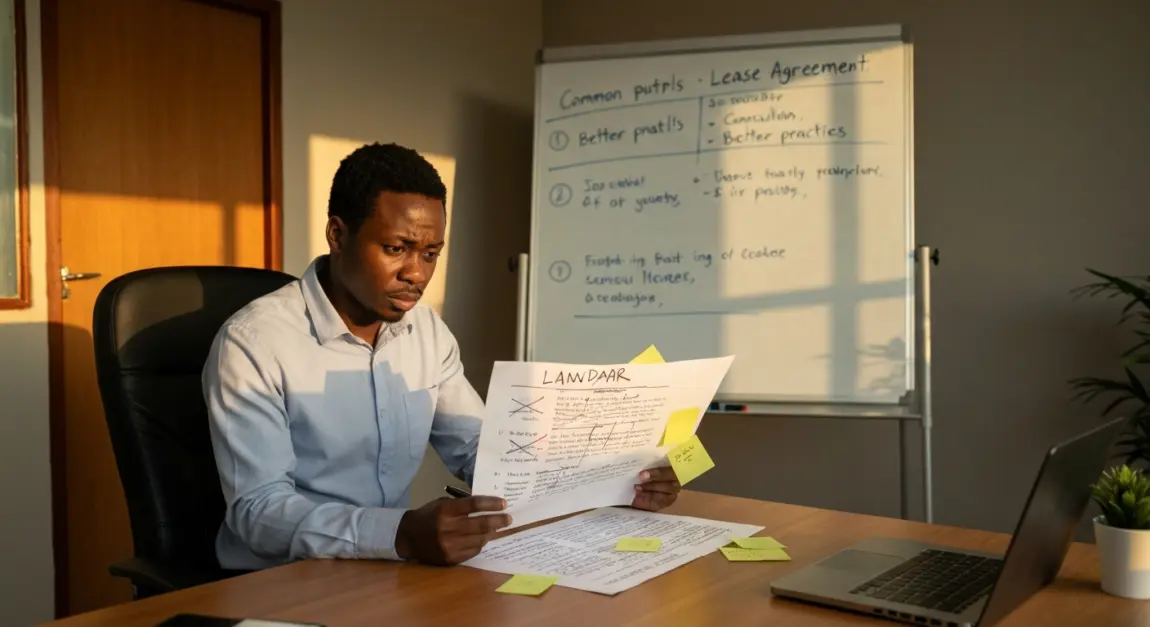
Many property owners fall into the trap of using generic templates found online that don’t account for tax requirements from BURS or local council bylaws. Other mistakes include:
- Verbal Agreements: These are hard to prove in court. Always put it in writing.
- Skipping the In-and-Out Inspection: Without a signed inspection report, you cannot prove the tenant caused damage.
- Not Checking References: Always verify where a potential tenant works and their previous rental history.
Practical Tips for Property Management
If you are treating your rental property as a business, consistency is vital. Make sure your property is visible to those searching for space by using a business directory in Botswana like Lephutshi. If you manage multiple units, you might even consider using technology to streamline your business, such as simple accounting software or digital receipting.
Conclusion
A comprehensive lease agreement is the foundation of a successful rental relationship. By tailoring your document to the local Botswana context and clearly outlining financial and maintenance duties, you protect both your property and your peace of mind. Remember, while templates are a great starting point, having a legal professional review your final draft is always a wise investment.
Ready to grow your property business visibility? Add your listing to Lephutshi to be discovered by more tenants. For more business tips, explore our blog or learn new skills on Dithutong today.
Recommended Reading
- Understanding Business Taxes in Botswana: A Landlord’s Overview
- A Guide to Obtaining a Trading License in Botswana
- CIPA Official Website: Registering Your Property Business
- Compliance Checklist for New Businesses in Botswana
- BURS Guide on Taxing Rental Income
FAQ
- Is a verbal lease agreement valid in Botswana?
Yes, verbal agreements can be legally binding, but they are very difficult to prove in the event of a dispute. It is strongly recommended to have a written lease. - What is the Land Tribunal?
The Land Tribunal is a specialized court in Botswana that handles disputes related to land and property, including rental disputes and evictions. - Can a landlord increase rent at any time?
No. Rent increases should be outlined in the lease agreement, typically occurring annually by a specified percentage (e.g., 5-10%). - Is rental income taxable in Botswana?
Yes. Landlords are required by law to declare rental income to the Botswana Unified Revenue Service (BURS) and pay the applicable tax. - What is the 2% rule for rental properties?
The 2% rule is a general guideline suggesting that a property’s monthly rent should be about 2% of its purchase price. However, in Botswana’s market, 0.5% to 1% is often more realistic depending on the area.