


Beekeeping for beginners in Botswana is more than just a hobby; it is a growing unique business idea with high demand. With Botswana importing a significant amount of honey every year, local honey production offers a massive opportunity for entrepreneurs to tap into the market. Whether you have a small backyard or a farm (masimo), beekeeping allows you to produce high-quality honey, beeswax, and other products with relatively low daily maintenance.
Why Beekeeping is a Profitable Venture in Botswana
Starting a beekeeping business offers both environmental and economic benefits. For many Botswana entrepreneurs, it serves as a reliable side hustle for extra income. Bees play a vital role in pollinating local crops like watermelons, citrus, and sunflowers, which can increase yields for nearby farmers.
Market Opportunities and Benefits
- High Demand: Pure, raw Botswana honey is highly sought after in local supermarkets, health shops, and by individual customers.
- Value-Added Products: Beyond honey, you can sell beeswax (for candles and cosmetics), propolis, and even offer pollination services to other farmers.
- Low Land Requirement: You don’t need a massive commercial farm to start; even a small, safe corner of a plot can host a few hives.
To see how other local producers are positioning themselves, you can explore listings on Lephutshi to find agricultural partners or competitors.
Choosing the Right Beehives for the Botswana Climate
Selecting the right hive is the foundation of your success. In Botswana, the climate can be harsh, so your hive choice must balance bee comfort with ease of management.
1. Langstroth Hives
Langstroth hives are the global standard and are very common in Botswana. They consist of stackable boxes with removable frames.
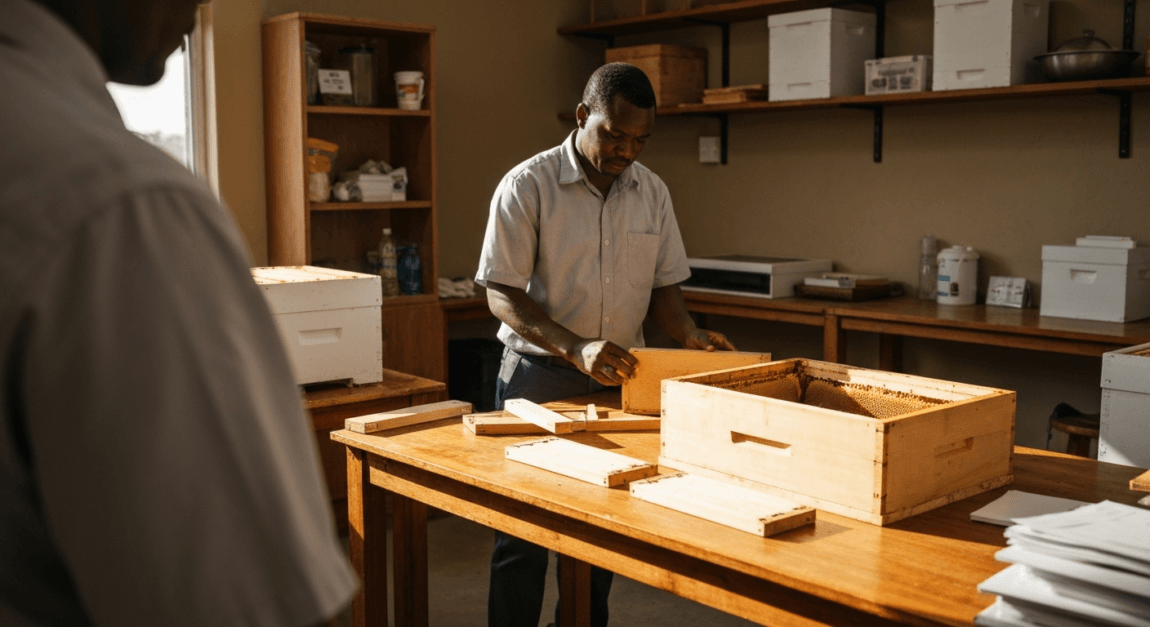
Pros: High honey yield and easy to transport.
Cons: Can be more expensive to purchase or build compared to simpler designs.
2. Kenyan Top Bar Hives (KTBH)
Many low-cost business ideas in Botswana involve the Top Bar hive. It is a long, trough-shaped box. It is often easier for beginners because it requires less heavy lifting and is cheaper to construct using local timber.
Essential Tools and Equipment
Safety and efficiency are key in beekeeping. You should never attempt to manage a hive without the proper protective gear.
Protective Gear and Handling Tools
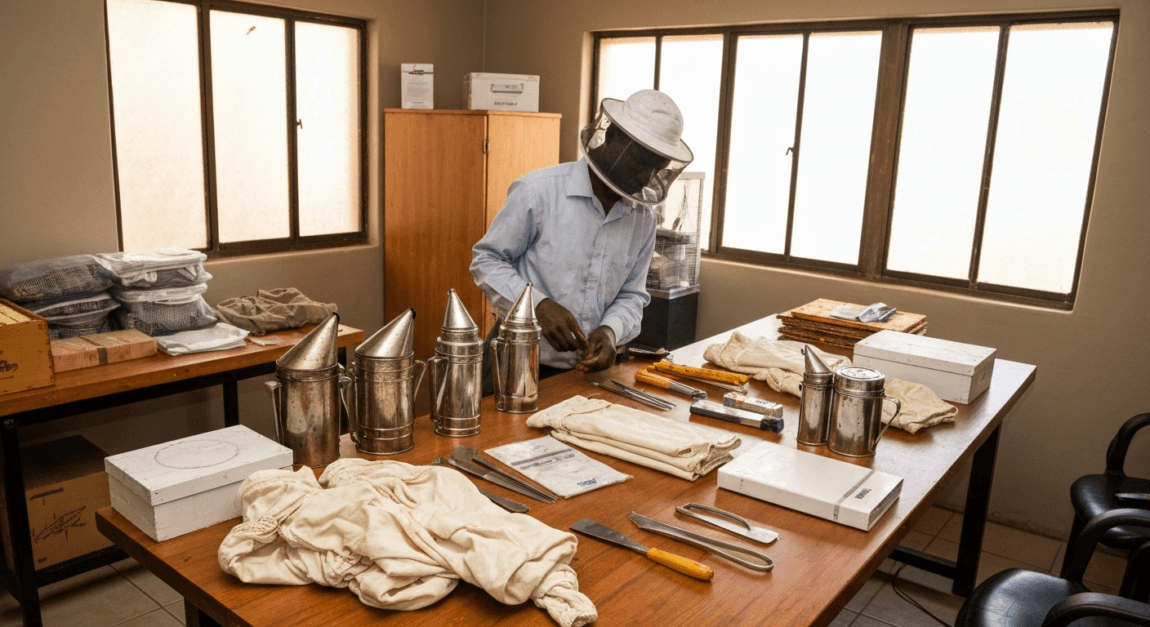
- Bee Suit: A full-body white suit with a veil to protect you from stings.
- Smoker: Used to calm the bees during inspections. You can use dried cow dung or pine needles as fuel.
- Hive Tool: A metal pry bar used to open the hive and move frames.
- Bee Brush: To gently remove bees from the honeycombs during harvest.
Estimated Startup Costs (BWP)
While prices vary, here is a realistic range for a single-hive setup in Botswana:
| Item | Estimated Price (BWP) |
|---|---|
| Langstroth Hive (Complete) | P850 – P1,500 |
| Full Protective Suit & Gloves | P600 – P950 |
| Smoker & Hive Tool | P350 – P500 |
| Total Estimated Start | P1,800 – P2,950 |
Site Selection and Hive Setup
In Botswana, the location of your apiary (bee yard) is critical due to the heat and the proximity of people.
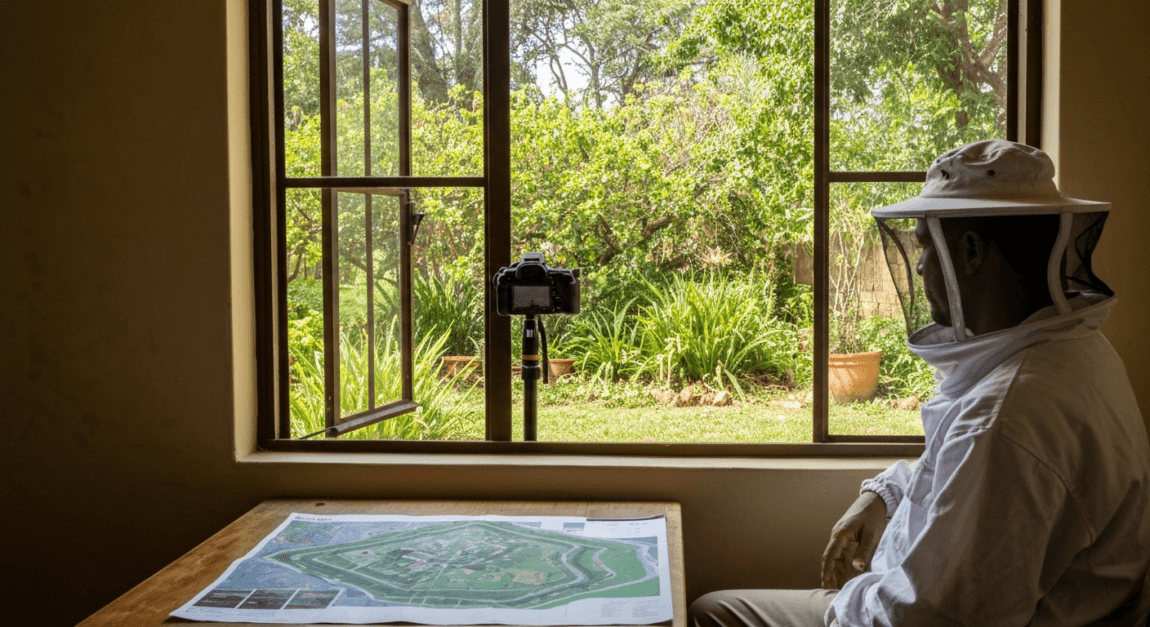
Ideal Locations
- Water Source: Bees need water to cool the hive. Place a small birdbath or water trough with floating corks/stones nearby so they don’t drown.
- Shade: Botswana sun can melt wax. Place hives under trees (like Acacia) or build a simple shade structure.
- Safety: Keep hives at least 30-50 meters away from high-traffic areas, schools, or livestock enclosures to prevent accidental stings.
Compliance and Regulations
Before you scale up, it is wise to understand the compliance checklist for Botswana businesses. You should register your business with CIPA (OBRS) and consult with the Department of Crop Production (Beekeeping Section) under the Ministry of Agriculture. They often provide free advice and sometimes host training workshops for beginners.
Colony Management and Harvesting
A hive isn’t a “set and forget” project. Regular inspections (every 2 weeks) are needed to check for the queen’s health, pests like hive beetles, and enough space for honey storage.
When to Harvest Honey
In Botswana, the primary harvest seasons usually follow the flowering periods of indigenous trees like the Mophane or Acacia. You know honey is ready when the bees have “capped” the cells with a thin layer of white wax. Using an extractor is the cleanest way to get honey, but for beginners, the “crush and strain” method for Top Bar hives is more affordable.
Marketing Your Local Honey
To turn your honey into profit, focus on branding. Clean glass jars with attractive labels go a long way.
- Payments: Most local customers prefer paying via Orange Money, FNB eWallet, or MyZaka.
- Delivery: Use local couriers or “taxis” for town deliveries, or offer customer pickups.
- Visibility: You can add your honey business listing to Lephutshi to help local buyers find you when they search for “local honey in Botswana.”
Common Beginner Mistakes to Avoid
Even with a good business plan for your Botswana venture, beekeeping has a learning curve.
- Harvesting too much: Always leave enough honey for the bees to survive during the dry winter months.
- Poor Water Access: If bees have to travel too far for water, they will spend less time making honey.
- Ignoring Pests: Ant management is crucial in Botswana. Greasing the legs of your hive stands can prevent ants from invading and killing the colony.
Conclusion
Beekeeping for beginners in Botswana is a journey that requires patience, but the rewards—both in honey and profit—are well worth the effort. By starting small, investing in the right protective gear, and following local agricultural guidelines, you can build a sustainable business that supports the environment and your bank account. Take the first step today by scouting for a safe location and reaching out to the Ministry of Agriculture for their latest beekeeping calendar.
Recommended Reading
- 10 Easy Business Ideas for Beginners in Botswana
- Organic Farming: A Guide to Eco-Friendly Business in Botswana
- Ministry of Agriculture: Beekeeping Training and Support Services
- Step-by-Step Guide to Registering Your Business in Botswana
FAQ
- How much honey can I get from one hive in Botswana?
A healthy Langstroth hive can produce between 15kg to 30kg of honey per year, depending on the availability of flowers and water in your area. - Is beekeeping dangerous in Botswana?
African bees can be defensive. However, with a proper bee suit, a good smoker, and by working during the right time of day (usually early morning or late afternoon), the risks are manageable. - Do I need a license to sell honey in Botswana?
For small-scale home sales, you usually don’t need a specific trading license, but if you plan to supply supermarkets, you will need to register your company, get a trading license, and meet food health and safety standards from your local council. - What is the best time of year to start a hive?
The best time to start is usually at the beginning of the flowering season (around August/September in Botswana) when swarms are naturally looking for new homes. - Where can I get bees for my hive?
You can “trap” a wild swarm by placing a baited hive (using beeswax or lemongrass oil) in a good spot, or you can purchase a nucleus colony (nuc) from an established local beekeeper.