

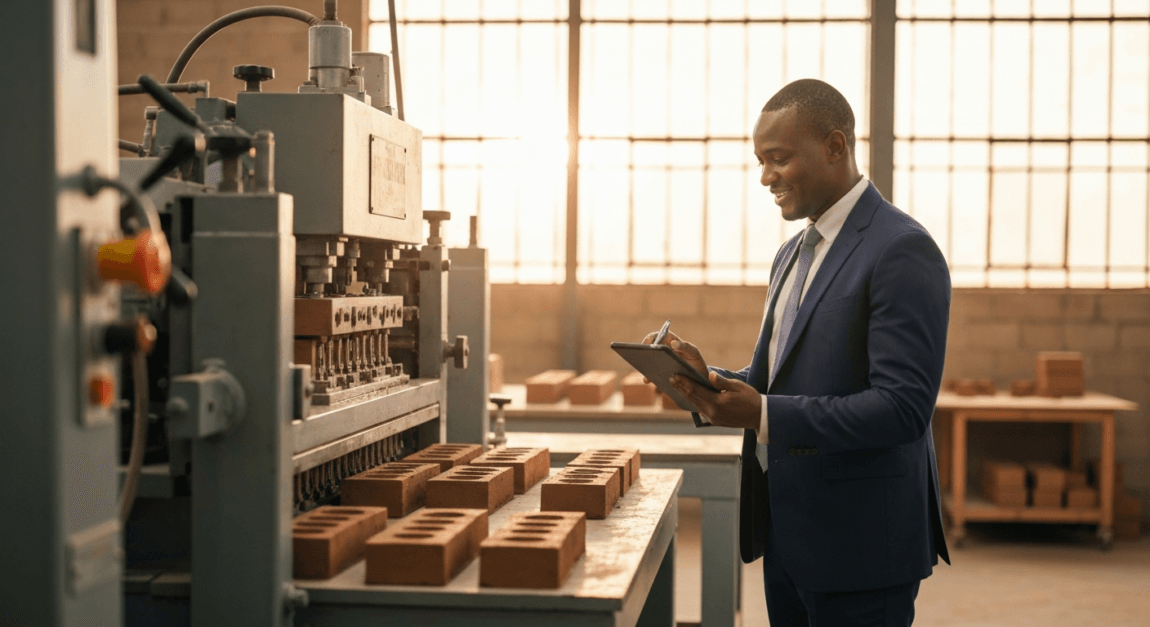
Starting a brick-making business in Botswana is one of the most practical ways to enter the construction industry. With the constant demand for residential housing, shopping complexes, and government infrastructure, quality concrete blocks are always in high demand. Whether you are starting a small-scale operation in your backyard or a large commercial plant, understanding the local market is the first step to success.
This guide provides a realistic look at what it takes to launch, from choosing the right machinery to meeting the Botswana Bureau of Standards (BOBS) requirements.
Is Brick or Block Making a Good Business in Botswana?
Yes, brick and block making remains a high-potential venture because the building industry is a cornerstone of the national economy. Unlike many service businesses, you are producing a physical, essential product.
- High Demand: From Gaborone’s urban sprawl to growing villages like Mogoditshane and Palapye, construction is everywhere.
- Scalability: You can start with a manual “egg-layer” machine and grow into a fully automated plant as your profits increase.
- Market Variety: You can sell to individual homeowners, local hardware stores, or large-scale contractors.
Before you dive in, it is wise to research winning business ideas in Botswana to see how your block yard can stand out from the competition. You should also consult a bill of quantities to understand exactly what types of blocks (e.g., 4.5 inch, 6 inch, or 9 inch) are most commonly requested in local tenders.
Legal Requirements and Compliance
To run a professional brick-making business in Botswana, you need to handle your paperwork correctly. This builds trust with large contractors and government departments.
- Company Registration: Register your business through CIPA (OBRS).
- Trading License: Visit your local Town or District Council to apply for a trading license. Requirements often include an inspection of your site to ensure it meets health and safety standards.
- BOBS Certification: For high-tier projects, your bricks must meet the Botswana Bureau of Standards (BOBS) specifications. Testing your bricks for compressive strength is essential if you want to supply government projects.
- Tax Compliance: Register with BURS and ensure you understand your business tax obligations early on.
Equipment Options and Production Methods
Your choice of equipment will determine your daily output and your initial startup cost. In Botswana, most small businesses start with manual or semi-automatic machines.
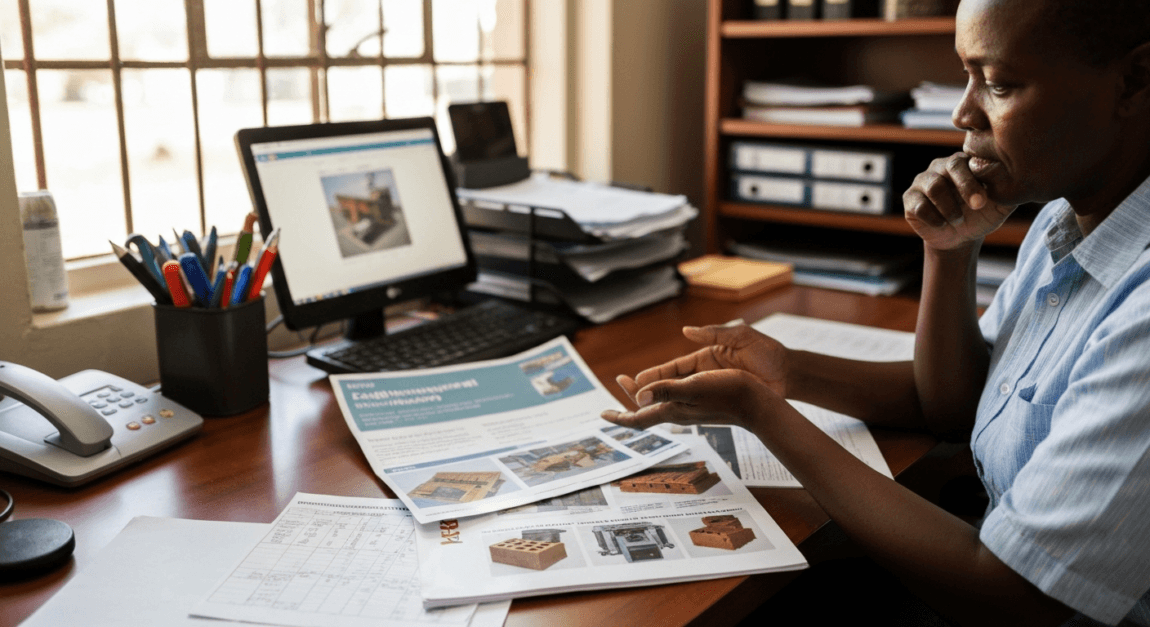
1. Manual Machines (Egg-Layers)
These are the most affordable and common for beginners. They are hand-operated and require significant physical labor. A manual machine might produce 300–800 blocks per day.
2. Semi-Automatic Machines
These use electric or diesel motors to vibrate the molds, which creates a denser, stronger block. These are excellent for scaling up without the massive cost of a full factory.
3. Fully Automatic Plants
These are high-output systems that handle mixing, molding, and stacking. While expensive, they offer the lowest cost per brick in the long run due to high efficiency.
Raw Materials and Production Costs
The quality of your bricks depends entirely on your mix. In Botswana, your main ingredients will be:
- Cement: Most builders prefer 42.5N grade cement (like PPC or Lafarge) for better strength.
- Sand: River sand is generally preferred over pit sand for concrete blocks because it is cleaner.
- Crushed Stone/Dust: Adding crusher dust can improve the texture and strength of the blocks.
- Water: You need a reliable water source. If your plot doesn’t have a connection, factor in the cost of water delivery.
Estimated Startup Costs: A small manual setup can start from P5,000 to P15,000 (including a machine and initial materials). A semi-automatic setup usually requires P30,000 to P100,000+. For funding assistance, many Batswana look into CEDA loans or youth funding options.

Pricing and Selling to Contractors
Pricing your bricks correctly is a balancing act. If you are too expensive, people will go to the big hardware stores. If you are too cheap, you won’t cover your cement and transport costs.
How to get paid
In Botswana, most small-scale sales are handled via cash, Orange Money, MyZaka, or eWallet. For larger contractors, you will need to provide professional invoices and accept EFT bank transfers. Always ensure you have a business bank account to keep your personal and business money separate.
Delivery and Logistics
Offering delivery is a huge competitive advantage. If you don’t own a truck, partner with a local 3-ton or 7-ton truck owner. Negotiate a delivery rate per load that you can pass on to the customer or include in your block price.
Marketing Your Block Yard
You don’t need a massive advertising budget to find customers. Local visibility is key.
- WhatsApp Business: Post your daily stock and prices on your status. Join local community groups (e.g., “Mogoditshane Buy & Sell”).
- Facebook Pages: Run simple ads targeting people in your specific town or district.
- Signage: Place a clear, professional sign at the entrance of your yard and on main roads nearby.
- Lephutshi Listing: Make sure you add your business to Lephutshi so contractors searching for “bricks in Gaborone” or “blocks in Francistown” can find you.
Common Quality Control Mistakes
Nothing kills a brick-making business faster than a reputation for “crumbly” bricks. Avoid these common errors:
- Poor Curing: Bricks must be kept damp and out of direct harsh sunlight for at least 7 days to reach full strength. Do not sell “green” bricks that were made yesterday.
- Wrong Mix Ratio: Trying to save money by using too little cement will result in weak blocks that break during transport.
- Dirty Sand: Sand mixed with soil or organic matter prevents the cement from bonding properly.
Conclusion
Launching a brick-making business in Botswana requires hard work and attention to quality, but the rewards are significant. By securing a good location, investing in reliable machinery, and following BOBS standards, you can build a sustainable business that supports the nation’s growth. Focus on building relationships with local builders and maintain a consistent supply to ensure long-term success.
Next Steps to Launch Your Business:
- Secure a plot with a reliable water source.
- Register your company and obtain necessary council permits.
- Source your machinery and identify reliable cement and sand suppliers.
- Produce a test batch and check for strength.
- List your business on Lephutshi to start getting discovered by local customers.
If you need help setting up your digital presence, contact Lephutshi Developers for a professional website. To sharpen your business skills further, explore online courses at Dithutong.
Recommended Reading
- Step-by-Step Guide: How to Start a Business in Botswana
- Compliance Checklist for New Botswana Businesses
- Case study: Lobatse Clay Works (LCW)
- How to Write a Business Plan (Botswana Template)
- Marketing Strategies for Small Budgets in Botswana
FAQ
- How much does it cost to start a brick-making business in Botswana?
A small manual operation can start with as little as P5,000 to P10,000. A more professional semi-automatic yard usually requires between P30,000 and P70,000 to cover equipment, labor, and initial raw materials. - Do I need a license to make bricks in Botswana?
Yes. You generally need a business registration from CIPA and a trading or industrial license from your local Council. If you supply large projects, you should also seek BOBS (Botswana Bureau of Standards) certification. - Which cement is best for making concrete blocks?
For commercial blocks, 42.5N grade cement is highly recommended as it provides higher early strength, which is essential for curing and transporting blocks without breakage. - How long should bricks cure before being sold?
Concrete blocks should ideally cure for at least 7 to 14 days. Selling them too early (within 1-3 days) often leads to breakage during delivery, damaging your reputation. - What is the cheapest building material in Botswana?
Locally sourced sand and cement remain the most cost-effective materials for structural building. While mud-bricks (dithina) are cheaper, they are less suitable for modern urban construction requirements.