


Ensuring safety on construction sites is more than just a legal requirement in Botswana; it is a moral obligation to protect your workforce and your business reputation. Construction toolbox talk topics provide a simple yet powerful way to keep safety at the forefront of every worker’s mind, especially within Botswana’s growing infrastructure and residential building sectors.
A toolbox talk is a short, informal safety meeting (usually 5 to 10 minutes) held at the start of a shift. For local contractors and SMEs, these meetings are the most cost-effective way to reduce accidents, avoid project delays, and ensure you are meeting general safety expectations often required for government and private tenders.
Why Toolbox Talks Matter for Botswana Contractors
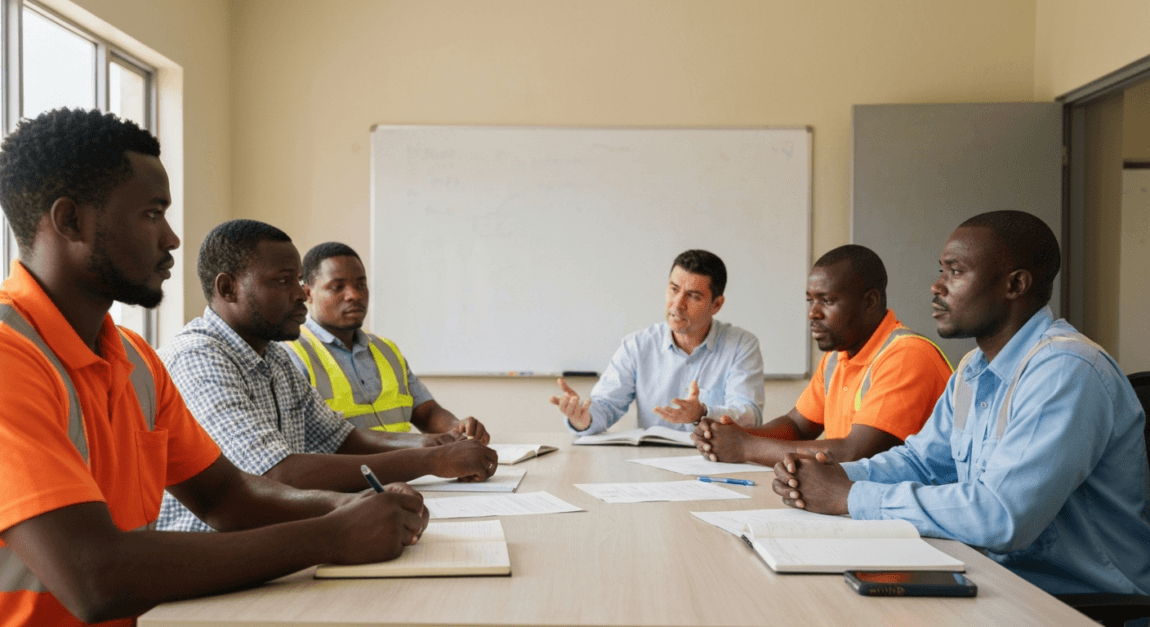
In Botswana, construction environments can be challenging due to extreme heat, dusty conditions, and often remote locations. Whether you are a small team doing home renovations or a medium-sized firm on a commercial site, toolbox talks help build a “safety-first” culture. They are particularly useful for staying compliant with the Department of Occupational Health and Safety (OHS) guidelines.
Benefits of regular talks include:
- Reduced Downtime: Fewer accidents mean fewer work stoppages.
- Tender Readiness: Many large companies and government bodies require a safety file, and documented toolbox talks are a key part of risk management.
- Improved Morale: Workers feel valued when their safety is prioritized.
- Clear Communication: Using a mix of English and Setswana ensures every team member understands the risks.
Essential Construction Toolbox Talk Topics by Risk Category
To keep your meetings effective, choose topics that are relevant to the work being done that day. Here is a breakdown of common risks and discussion points for Botswana building sites.
1. Personal Protective Equipment (PPE)
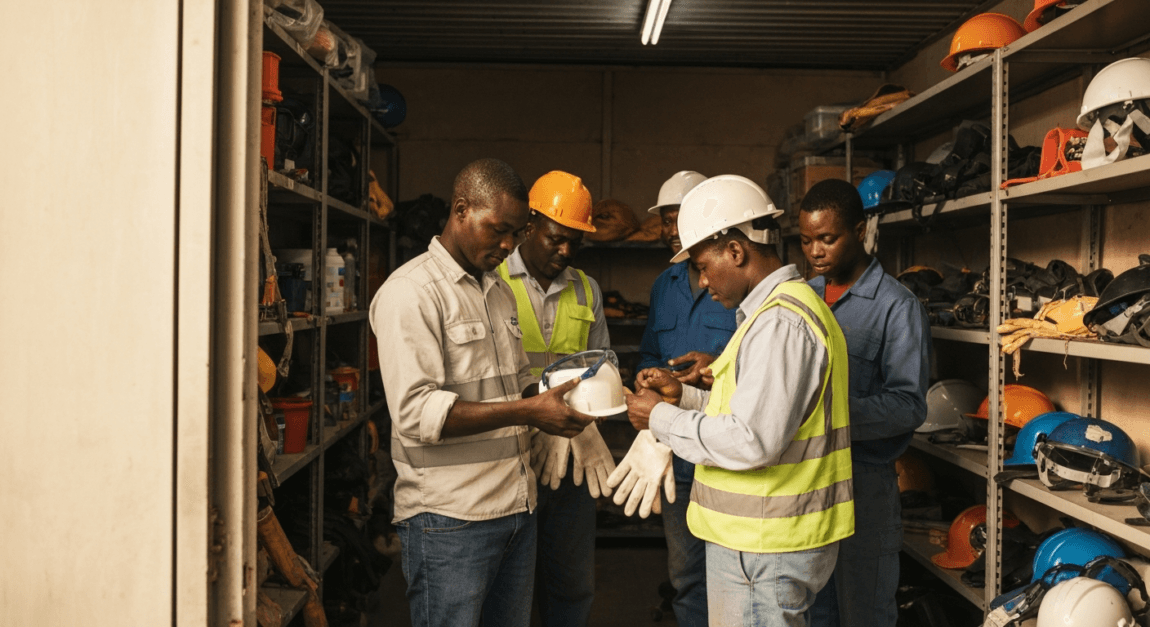
PPE is the last line of defense. In Botswana’s climate, PPE must be both protective and breathable where possible.
- Hard Hats: Checking for cracks caused by high UV exposure.
- Footwear: Why “all-stars” or sneakers are not allowed on site; the importance of steel-toed boots.
- Eye Protection: Preventing dust and grit from entering eyes during windy days.
- High-Visibility Vests: Ensuring workers are seen by plant and vehicle operators.
2. Working at Heights
Falling from heights remains a leading cause of severe injury on sites. This is a critical construction toolbox talk topic for teams doing roofing or multi-story brickwork.
- Scaffolding Safety: Never use makeshift platforms; check for stable footing on sandy ground.
- Ladder Safety: The 4-to-1 rule and maintaining three points of contact.
- Fall Arrest: Proper use of harnesses when working on high-rise structures in Gaborone or CBD areas.
3. Manual Handling and Lifting
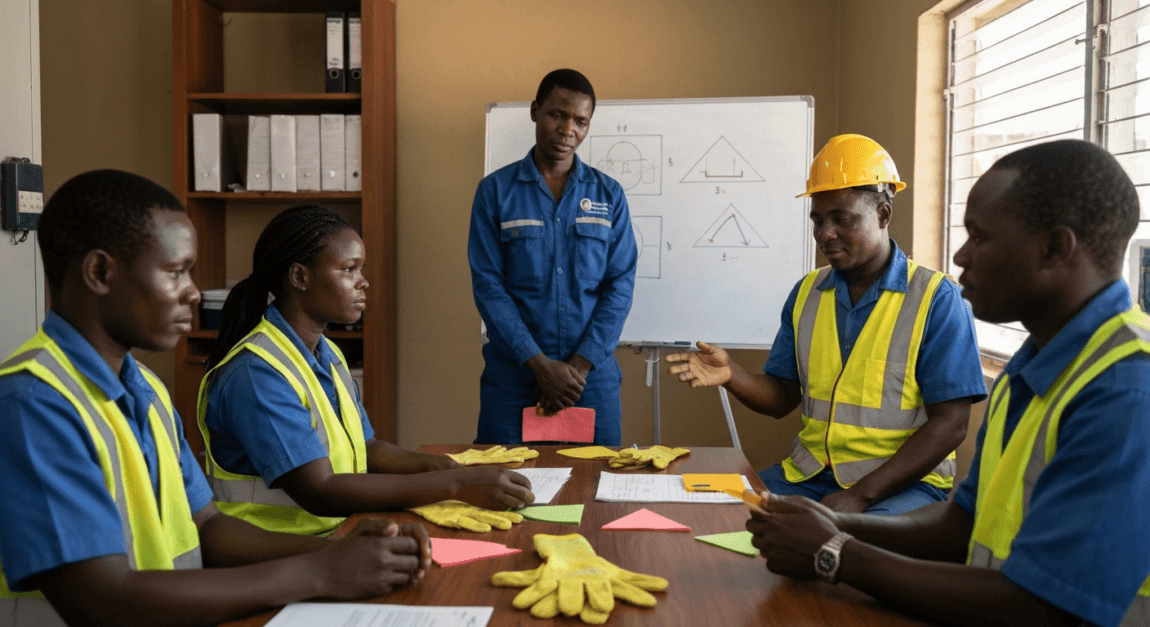
Back injuries can take a worker off the job for weeks. Focus on technique over strength.
- Safe Lifting: Bend the knees, keep the load close to the body.
- Team Lifting: Always ask for help with heavy bags of cement or steel lintels.
- Clearing Paths: Ensuring the route is free of rubble before carrying materials.
4. Electrical Safety
On many Botswana sites, temporary power connections and extension leads are common. These pose a high risk, especially during the rainy season.
- Cable Management: Keeping leads off wet ground and away from walkways.
- Tool Inspection: Checking for frayed wires on grinders and drills.
- Illegal Connections: The dangers of bypassing DB boards or using unsafe “shack” power.
5. Heat Stress and Dehydration
This is a uniquely important topic for Botswana. Working in 35°C+ temperatures is a major health hazard.
- Hydration: Encouraging workers to drink water before they feel thirsty.
- Rest Breaks: Planning heavy labor for earlier in the morning or later in the afternoon.
- Signs of Heatstroke: Dizziness, headaches, and heavy sweating.
6. Site Housekeeping
A messy site is a dangerous site. Slips and trips are easily preventable with good habits.
- Nail Hazards: Removing or hammering down nails in waste timber.
- Waste Disposal: Keeping rubble in designated piles.
- Storage: Stacking bricks and blocks safely so they don’t topple.
How to Run an Effective 5-Minute Toolbox Talk
You don’t need a lecture hall to save lives. Follow this simple format to keep your team engaged:
- Keep it Local: Use examples from your current site (e.g., “Yesterday I saw someone nearly trip over that trench…”).
- Demonstrate: Don’t just talk; show how to wear a harness or check a lead.
- Keep it Short: 5 to 10 minutes is enough. Do not let it turn into a long complaint session.
- Invite Feedback: Ask, “What safety risks did you notice yesterday?”
- Document Everything: Use a simple sign-in sheet. This proves you are managing safety if an inspector from the council or OHS arrives.
Local Operational Realities for Construction SMEs
Running a construction business in Botswana involves more than just site safety. If you are growing your firm, consider these practical steps:
- Compliance: Ensure your business is registered via CIPA/OBRS and that you have a valid tax clearance certificate from BURS for tenders.
- Getting Paid: Use professional online payment methods or bank transfers for larger contracts. For casual labor, Orange Money or eWallet are standard, but always keep a signed receipt for your accounting.
- Marketing: Most local building work comes from referrals. Add your construction business to Lephutshi to be discovered by homeowners and developers looking for reliable local contractors.
Conclusion
Implementing regular construction toolbox talk topics is one of the easiest ways to improve site safety and professionalize your business. By taking five minutes every morning to discuss hazards like heat stress, falling from heights, or PPE, you protect your most valuable asset—your people. A safe site is a productive and profitable site.
Recommended Reading
- Internal: Compliance Checklist for Botswana Businesses
- Internal: Risk Management and Business Continuity
- Internal: Project Management Best Practices for SMEs
- External: Health and Safety Executive (UK) – Construction Safety Topics (High-quality resource for technical safety standards)
- External: ISO 45001: Occupational Health and Safety Standards
FAQ
- How often should I conduct toolbox talks?
Ideally, every morning before work starts. If that is not possible, aim for at least once a week or whenever a new high-risk task begins. - Do I need a qualification to lead a toolbox talk?
No, any experienced supervisor or site manager can lead one. The goal is practical safety awareness, not a certified training course. - What is the biggest hazard on Botswana construction sites?
While falls from height are globally the biggest killer, in Botswana, heat-related illness and improper use of temporary electrical connections are also very high-risk factors. - How do I document a toolbox talk for my safety file?
Keep a simple notebook or form with the date, the topic discussed, the name of the person who gave the talk, and a list of signatures from everyone who attended. - What should I do if a worker refuses to wear PPE?
Safety is non-negotiable. You should have a clear site policy that makes PPE a condition of work. Explain the risks first, but use disciplinary measures if the refusal continues, as it puts the whole business at risk.