


Ensuring safety on construction sites in Botswana is more than just a legal requirement; it is imperative for protecting your workforce and maintaining efficient operations. Whether you are a small contractor handling home renovations in Gaborone or a developer overseeing a large project in Francistown, a basic safety system prevents costly injuries and fosters a culture of professional responsibility.
In Botswana, construction accidents can lead to significant project delays, heavy fines, and damage to your reputation. By using a practical construction site safety checklist Botswana businesses can mitigate these risks and ensure every worker returns home safely.
Why Every Botswana Site Needs a Safety Plan
Implementing a safety system tailored to local conditions is crucial. For small and medium-sized projects, such as home builds, a safety plan ensures that even informal workers understand the hazards. For entrepreneurs, focusing on safety is a key part of risk management and business continuity.
Comprehensive Construction Site Safety Checklist
A robust safety checklist addresses the critical elements every site must monitor daily. From heavy machinery to basic housekeeping, these components are vital for maintaining a safe environment:

1. Personal Protective Equipment (PPE)
- Hard Hats: Required at all times to protect against falling objects.
- High-Visibility Vests: Essential for workers to be seen by operators of trucks and machinery.
- Safety Boots: Steel-toed boots to prevent crushing injuries and punctures.
- Eye & Ear Protection: Necessary when using grinders, drills, or working in high-decibel areas.
2. Site Access and Signage
- Fencing: Ensure the site is hoarded or fenced to prevent unauthorized entry by children or animals.
- Signage: Display clear warnings such as “Construction Area” and “PPE Required.” You can download a Construction Site Signage Checklist for specifics.
- Visitors Log: Everyone entering the site must sign in and be briefed on basic safety.
3. Structural and Tool Safety
- Scaffolds: Must be erected on stable ground and inspected daily. In Botswana’s sandy soil, ensuring the base plates are secure is critical.
- Power Tools: Check for frayed wires and ensure all guards are in place. With local power fluctuations, using surge protectors can prevent tool damage.
- Ladders: Must be tied off and used at the correct 4:1 ratio.
Managing Local Hazards: Heat and Environment
Operating in Botswana presents unique environmental challenges that aren’t always covered in international safety manuals. For effective project management, you must account for:
- Heat Stress: During summer months, schedule heavy labor for earlier in the morning and ensure workers have access to shaded rest areas and clean drinking water.
- Dust Control: Botswana is prone to dust, which can cause respiratory issues. Use water to dampen soil during excavation and provide dust masks to workers.
- Wildlife and Pests: On sites near bushes or in rural areas, be aware of snakes and scorpions during site clearing.
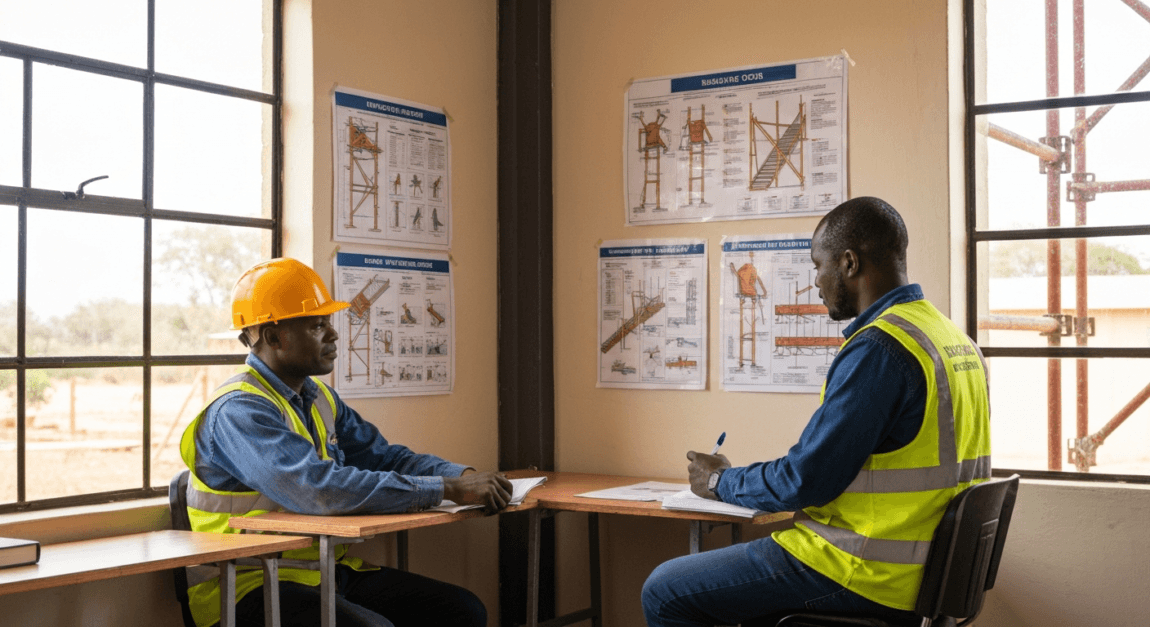
Daily Inspection Forms and Record Keeping
Daily inspections are the cornerstone of site safety. They allow for the quick identification of hazards before they lead to an accident. Keeping records is also essential for business compliance in Botswana should an inspector from the Department of Labour visit your site.

Practical Tools for Site Managers
While many use paper forms, digital tools like simple WhatsApp groups for daily “Safe-to-Work” photos or dedicated apps can streamline reporting. This is especially helpful for owners who are not on-site every day. For more on using technology in your business, check out how to streamline your operations.
Conclusion and Action Steps
Implementing a comprehensive safety plan on Botswana construction sites is a critical component of professional success. By sticking to a robust safety checklist and conducting daily inspections, you protect your most valuable asset—your people—while ensuring your project stays on schedule and within budget.
Next Steps for Site Owners:
- Audit your current site: Walk through today and identify three immediate hazards.
- Stock your First Aid: Ensure a kit is available and that at least one person on-site knows how to use it.
- Register your business: Professionalism starts with being a recognized entity. Ensure you are up to date with company registration.
Ready to grow your construction business visibility in Botswana? Add your business to Lephutshi today. For help building a professional website to showcase your safe and successful projects, contact Lephutshi Developers.
Recommended Reading
- Compliance Checklist for New Businesses in Botswana
- Project Management Best Practices for Botswana SMEs
- Daily PPE Inspection Checklist for Construction Sites
- Botswana Service Specific Standards – Occupational Health
- Risk Management and Business Continuity in Botswana
FAQ
- What is the biggest hazard in construction in Botswana?
Falls from heights remain the leading cause of serious injury, often due to poorly erected scaffolding or a lack of fall-arrest equipment on residential rooftops. - Are there specific safety laws for construction in Botswana?
Yes, construction activities fall under the Factories Act and the Employment Act. Employers are responsible for providing a safe working environment and necessary PPE. - What kills most construction workers globally and locally?
Electrocution, falling objects, and being caught between machinery are the top causes of fatal incidents. In Botswana, trench collapses during foundation digging are also a significant risk. - How does the heat in Botswana affect site safety?
Extreme heat leads to dehydration and heatstroke, which impairs a worker’s judgment and physical ability, significantly increasing the risk of accidents. - What should be in a basic on-site first aid kit?
At a minimum, it should include bandages, antiseptic, gloves, burn dressing, and an emergency eye-wash solution, kept in a dust-proof container.