


As a small business owner in Botswana, managing your money can feel like a full-time job. Whether you are running a tuckshop in Maun, a consultancy in Gaborone, or a poultry farm in Mahalapye, you’ve likely heard that you need both bookkeeping and accounting. But what is the actual difference, and which one should you pay for right now?
In simple terms, bookkeeping is about recording the daily money coming in and going out, while accounting is about making sense of those numbers to help you make decisions and stay compliant with the Botswana Unified Revenue Service (BURS). Understanding bookkeeping vs accounting for small business in Botswana is the first step toward long-term financial health.
What Bookkeeping Covers for Botswana SMEs
Bookkeeping is the foundation of your business’s financial system. It involves the systematic recording of every single financial transaction. If you don’t have accurate books, your accountant cannot help you when tax season arrives.
Daily Bookkeeping Tasks
In the realm of bookkeeping basics, your daily or weekly tasks should include:
- Recording sales (whether cash, Orange Money, eWallet, or bank transfer).
- Collecting and filing receipts for every expense (petrol, rent, airtime, stock).
- Issuing invoices to clients and tracking who has paid.
- Processing payroll for your staff.
- Reconciling bank statements to ensure your records match your bank balance.
Tools and Software Used in Botswana
Gone are the days of only using physical notebooks (though some still do). Most Botswana businesses now use digital tools to keep things organized. Popular options include QuickBooks, Xero, and Sage Pastel. Sage is particularly popular in Botswana because many local accounting firms are familiar with its interface.
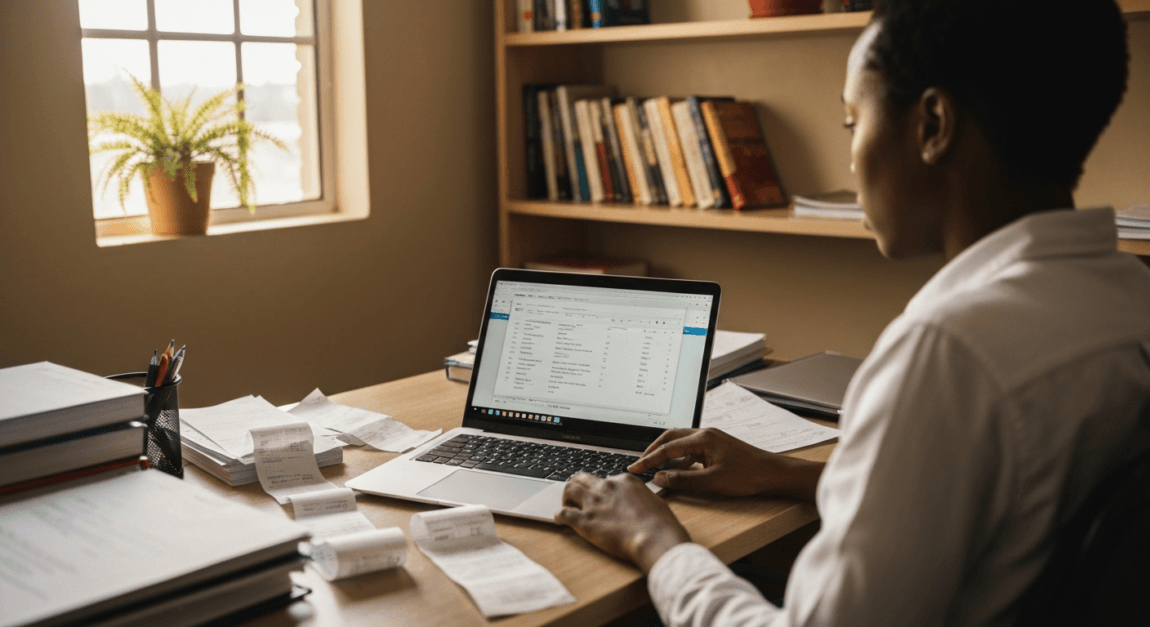
Local Reality: The “Shoebox” Method
Many Batswana entrepreneurs fall into the trap of the “shoebox method”—throwing all receipts into a box and ignoring them until they need a Tax Clearance Certificate. This is risky. If BURS audits you and you lack organized records, you could face heavy penalties. Effective bookkeeping ensures you are always “audit-ready.”
What Accounting Covers
Accounting takes the data your bookkeeper (or you) recorded and turns it into a strategic roadmap. An accountant looks at the big picture to see if your business is actually making a profit or just moving money around.
The Role of an Accountant in Botswana
Accounting involves high-level tasks that usually require a professional qualification (like BICA or ACCA membership). Key activities include:
- Financial Statements: Preparing Balance Sheets and Profit & Loss statements required for CEDA or NDB loan applications.
- Tax Compliance: Calculating and filing Income Tax, VAT, and PAYE through the BURS ITAS portal.
- Business Analysis: Advising on whether you can afford to hire more staff or open a second branch.
- Audit Preparation: Ensuring your company meets the requirements of the Companies Act.

Key Differences at a Glance
The primary difference lies in the objective. While bookkeeping records, accounting interprets. Think of it this way: the bookkeeper tells you that you spent P5,000 on stock last month; the accountant tells you that your stock costs are too high compared to your sales, and you are losing money.
Why Botswana SMEs Need Accounting
Beyond just “doing the math,” accounting is essential for compliance. For example, if your turnover exceeds P1,000,000, you must register for VAT. An accountant will help you manage this transition and ensure you aren’t overpaying or underpaying the government.
When Do You Need Each Service?
Deciding when to hire help depends on your business stage. You don’t always need a full-time accountant from Day 1, but you always need bookkeeping.
Start with Bookkeeping
From the moment you register your company with CIPA, you need bookkeeping. If you are a solo entrepreneur, you can do this yourself using a spreadsheet or simple software. This ensures you track every Pula from the start.
Bring in an Accountant When…
- You need to file annual tax returns with BURS.
- You are applying for funding from institutions like CEDA or commercial banks.
- You are struggling to understand why your bank account is empty despite high sales.
- You want to file annual returns with CIPA correctly.
Cost and Outsoring in Botswana
Hiring a full-time accountant is expensive for most small businesses. Fortunately, Botswana has many freelance bookkeepers and accounting firms that offer monthly packages.
Estimated Costs (BWP)
While prices vary, here is a general idea of what you might expect to pay in the Botswana market:
| Service Type | Estimated Monthly Cost (BWP) | Best For |
|---|---|---|
| Freelance Bookkeeper | P500 – P2,500 | Micro-businesses & Side Hustles | Accounting Firm (SME Package) | P2,500 – P7,500+ | Established SMEs with VAT/PAYE |
| Tax Filing Only (Once-off) | P1,500 – P5,000 per filing | Year-end compliance |
Note: These are estimates. Always request a quote and verify if the person is registered with the Botswana Institute of Chartered Accountants (BICA) for professional accounting work.
Conclusion
Bookkeeping and accounting are both indispensable for running a successful business in Botswana. Bookkeeping handles the daily “heavy lifting” of tracking money, while accounting provides the “vision” to help you scale. By keeping clean records from the start, you protect your business from BURS penalties and make it much easier to secure funding for growth.
Ready to grow your business visibility? Add your business to Lephutshi today so customers can find you. If you need help with digital growth, check out Lephutshi Developers, or learn new business skills on Dithutong.
Recommended Reading
- A Simple Guide to Business Taxes in Botswana
- Best Finance and Accounting Books for Entrepreneurs
- How to Get a Tax Clearance Certificate in Botswana
- Official BURS Website (External)
- Botswana Institute of Chartered Accountants (BICA)
FAQ
- What’s the main difference between bookkeeping and accounting?
Bookkeeping is the administrative task of recording daily financial transactions. Accounting is the analytical process of interpreting those records to provide financial insights and ensure tax compliance. - Do I legally need an accountant in Botswana?
While you can do your own bookkeeping, certain tasks—like auditing financial statements for large companies or specific BURS filings—should be handled by a qualified professional. For CEDA loans, professionally prepared financials are usually mandatory. - Can I use Excel for my bookkeeping?
Yes, for very small businesses or startups, Excel is a great starting point. However, as you grow, software like QuickBooks or Sage is safer because it reduces human error and makes generating reports much faster. - What is BURS ITAS?
ITAS stands for Integrated Tax Administration System. It is the online portal used in Botswana to file tax returns, check tax status, and apply for tax clearance certificates. - How often should I update my books?
Ideally, daily. At a minimum, you should update your records once a week to ensure you don’t lose receipts or forget small cash expenses that add up.