

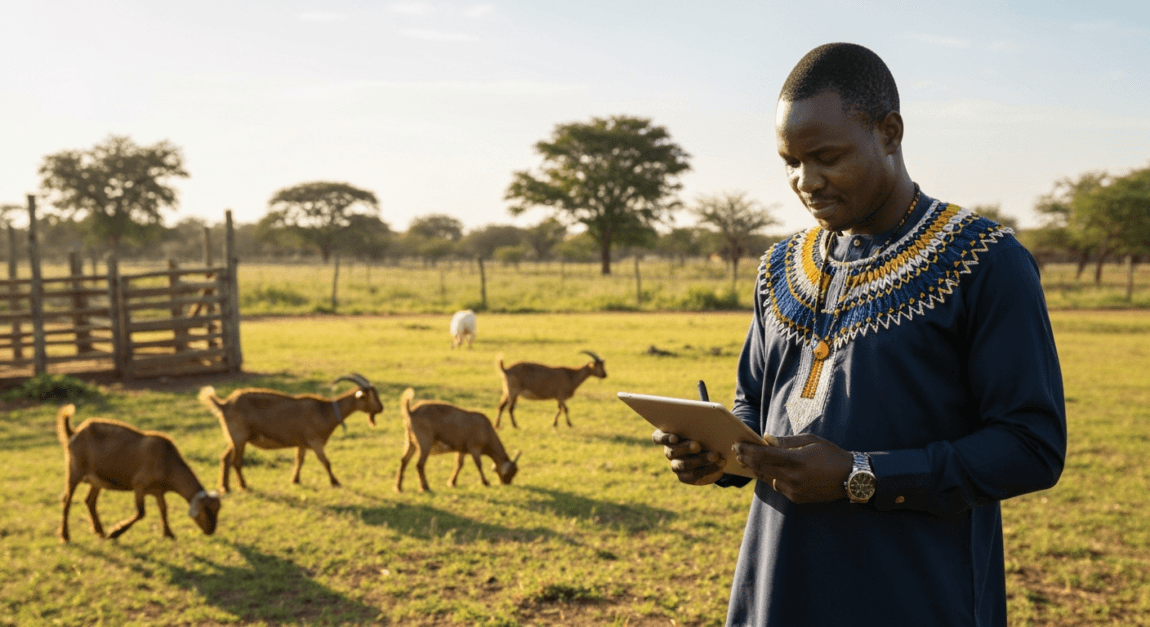
Starting a goat farming business in Botswana is one of the most accessible ways to enter the agribusiness sector. Unlike cattle, goats require less land, lower initial capital, and are highly resilient to our semi-arid climate. Whether you are looking for a side hustle at the cattle post or a full-scale commercial venture, this goat farming business guide for beginners provides the roadmap you need.
Why Choose Goats for Your Botswana Business?
Goat farming, often referred to as small stock farming, is a cornerstone of Botswana’s rural economy. From a business perspective, goats offer a faster return on investment because they reach maturity quickly and have high reproduction rates (often producing twins or triplets).
Culturally, there is a consistent demand for goat meat (Seswaa) for weddings, funerals, and festive seasons. Furthermore, organizations like the Botswana Meat Commission (BMC) and local butcheries provide steady market outlets for farmers who maintain quality standards. If you are still exploring options, check out our list of profitable small business ideas in Botswana to see how livestock compares.
Common Meat Breeds in Botswana
Selecting the right breed is the most important decision in your goat farming business guide. In Botswana, we primarily focus on meat production, though dairy is a niche opportunity.
- Tswana Goat: The indigenous breed. It is extremely hardy, disease-resistant, and can survive on minimal browse. Great for beginners with limited resources.
- Boer Goat: A powerhouse for meat production. They grow fast and carry a lot of weight but require better management and nutrition than the Tswana goat.
- Red Kalahari: Known for its distinctive red coat that protects it from the sun, this breed is resilient and produces high-quality meat.
- Savanna: A white-coated, hardy breed that handles the Botswana heat well and is excellent for commercial meat production.

Housing and Fencing Requirements
Your goats need a safe environment to thrive. Proper housing protects them from predators (like jackals and stray dogs) and harsh weather. For many, this starts with a simple kraal, but a commercial mindset requires better infrastructure.
Essential Housing Facilities
Goat housing should be well-ventilated and kept dry to prevent hoof rot and respiratory issues. In Botswana, many farmers use locally sourced gum poles and wire, but adding a raised slatted floor can significantly improve hygiene. If you are planning a large-scale setup, you might need a business plan to secure funding for infrastructure.
Best Practices for Fencing
Goats are famous for being “escape artists.” Use high-quality diamond mesh or jackal-proof fencing. A height of at least 1.2 to 1.5 meters is recommended. If you are operating on a larger farm, consider electric fencing to deter predators. Costs for fencing can range from P5,000 for a small backyard setup to over P50,000 for larger acreage.
The Breeding Cycle and Management
To keep your goat farming business profitable, you need a high kidding rate. A typical doe (female goat) can have two kidding seasons every 18 months if managed well.
- Gestation Period: Approximately 150 days (5 months).
- Weaning: Kids are usually weaned at 3 to 4 months.
- Best Age to Breed: Does should be at least 8–10 months old or weigh at least 30kg–35kg before their first breeding to ensure they are physically mature enough to carry and nurse kids.
Success here requires strict record-keeping. You should track birth dates, weight gains, and vaccination schedules. For more on managing your operations, see our guide on strategic management for Botswana businesses.
Feeding and Health Care
While goats are browsers, they cannot thrive on dust alone. A balanced diet is essential for meat quality. In Botswana, this often involves a mix of natural grazing and supplementary feeding (especially during the dry winter months).
Nutrition Strategies
Provide Lucerne, lablab, or commercial small stock pellets during droughts. Always ensure they have access to clean water and salt licks (phosphorus is particularly important in our soils). Monitoring feed costs is vital to ensure you don’t spend more than you earn.
Vaccination and Disease Control
Work with your local veterinary office or a private vet. Common requirements include vaccinations for Pulpy Kidney and Pasteurella. Regular deworming is also necessary, especially after the first rains.
Startup Costs and Marketing Your Goats
A small-scale startup (10 does and 1 buck) might require between P15,000 and P30,000 depending on the breed and existing infrastructure.
Getting Paid and Local Logistics
In Botswana, marketing is often done via word-of-mouth, but digital tools are changing the game. Use marketing on a small budget techniques like posting on Facebook farming groups or WhatsApp statuses.
- Payments: Most local buyers pay via cash, FNB eWallet, Orange Money, or MyZaka. For commercial sales to butcheries, ensure you can provide a proper invoice.
- Logistics: You may need a small trailer or a bakkie to transport goats to the market. Many farmers also offer “farm gate” sales where the buyer arranges transport.
Compliance and Registration
To sell to formal markets, you must register your brand with the Department of Veterinary Services (DVS) and ensure your goats are tagged (BAITS system). This is crucial for traceability and livestock security. If you are looking for startup capital, navigating CEDA loans is a great next step for many small stock farmers.
Conclusion
Goat farming is a sustainable and rewarding business that fits the Botswana landscape perfectly. By focusing on the right breeds, maintaining strict health protocols, and managing your costs, you can turn a small herd into a thriving commercial enterprise. Remember, every successful farmer started with a single animal and a solid plan.
Ready to grow your business visibility in Botswana? Add your business to Lephutshi today. If you need help building an online presence for your farm or agribusiness, visit Lephutshi Developers. For those looking to learn more agricultural skills, explore Dithutong.
Recommended Reading
- How to Start a Business in Botswana: A Step-by-Step Guide
- Business Plan Botswana: Template and Practical Guide
- Smallstock Farmers Botswana (Facebook Group)
- How to Apply for CEDA Loans for Agribusiness
- CEDA Official Website
FAQ
- Is goat farming profitable in Botswana?
Yes. With high local demand for meat and relatively low maintenance costs compared to cattle, goat farming is one of the most profitable small-scale agricultural ventures in Botswana. - What is the best goat breed for meat in Botswana?
The Boer goat and Red Kalahari are the top choices for commercial meat production, while the Tswana goat is best for low-maintenance, hardy farming. - How much does it cost to start a goat farm?
A small start with 10 goats can range from P15,000 to P30,000, covering the animals, basic fencing, and initial feed/medication. - What is the BAITS system?
The Botswana Animal Information and Traceability System (BAITS) is used to track livestock. All goats must be tagged to be legally sold to formal markets or moved between zones. - What is the best age to breed goats?
Goats should ideally be bred between 8–10 months of age, provided they have reached a healthy breeding weight (usually around 35kg for meat breeds).