


Tenders in Botswana represent one of the most effective ways for small businesses and startups to secure high-value contracts with the government and large private companies. Whether you are providing cleaning services, supplying office stationery, or undertaking construction work, understanding the tendering process is the first step to scaling your operations.
To win a tender, you don’t just need a good price; you need a compliant business that follows the rules set by the Public Procurement Regulatory Authority (PPRA) and other local authorities. In this guide, we break down the basics of finding and applying for tenders in Botswana without the technical jargon.
What is a Tender in Botswana?
In Botswana, a tender (often called an Invitation to Tender or ITT) is a formal request for a business to provide goods, services, or works at a specific price and quality. The government or a private company publishes these notices to find the most qualified supplier through a fair and competitive process.
The Difference Between an ITT and an RFP
While people use the word “tender” broadly, you may see different terms:
- ITT (Invitation to Tender): Usually focused on the lowest price for a clearly defined product (e.g., supplying 100 chairs).
- RFP (Request for Proposal): Used when the buyer has a problem and wants you to propose a solution (e.g., designing a new digital filing system).
- EOI (Expression of Interest): A preliminary step to see which companies are capable before the actual tender is released.
Where to Find Tenders in Botswana
Knowing where to look is half the battle. Opportunities are published daily, but they are spread across several platforms.
1. Official Government Sources
The majority of large-scale tenders come from the Botswana Government. You can find these in:
- The Botswana Daily News: This is a free government newspaper where most public tenders are advertised.
- The Government Gazette: A formal weekly publication that lists official notices and procurement opportunities.
- The Botswana Government Portal: Visit the official website’s procurement section for digital listings.
2. Private Sector and Parastatal Portals
Entities like Debswana, Botswana Power Corporation (BPC), and Water Utilities Corporation (WUC) often have their own dedicated supplier portals. Private companies may also advertise in newspapers like Mmegi or The Botswana Guardian.
3. Online Tender Aggregators
There are local services like “Tenders Botswana” that compile listings from various sources into one email or website for a subscription fee. This can save you time if you have the budget.
Essential Compliance: What You Need Before You Bid
Before you even look at a tender document, your business must be “tender-ready.” In Botswana, this means having your documents in order. If one document is missing or expired, your bid is usually disqualified immediately.
The “Golden Three” Documents
Most tenders in Botswana will require these as a minimum:
- Company Registration: You must be registered with CIPA (via the OBRS system).
- Tax Clearance Certificate: You must prove you are up to date with your taxes at BURS. Learn more about getting a tax clearance certificate in Botswana.
- PPRA Registration: Formerly known as PPADB, you must register your company under specific “Codes” and “Sub-codes” that match the services you offer.

Local Preference Schemes (EDD)
The Botswana government often supports local businesses through the Economic Diversification Drive (EDD). If you have an EDD certificate, you may receive a price preference (meaning you can win even if your price is slightly higher than a foreign competitor). Check with the Ministry of Trade and Industry to see if you qualify.
How to Prepare a Winning Tender Bid
Writing a bid is about more than just filling in a price. It is a sales pitch that proves you are reliable.
Research the Requirements
Read the tender document at least three times. Look for the “Evaluation Criteria.” This tells you exactly how the judges will score your bid. If they give 20 points for “Past Experience,” make sure you include reference letters from previous clients.

Realistic Pricing
Many beginners make the mistake of bidding too low just to win, only to realize they can’t afford to finish the work. Factor in your transport, labor, materials, and a small profit margin. In Botswana, consider the cost of logistics—delivering goods to Maun or Ghanzi costs more than delivering in Gaborone.
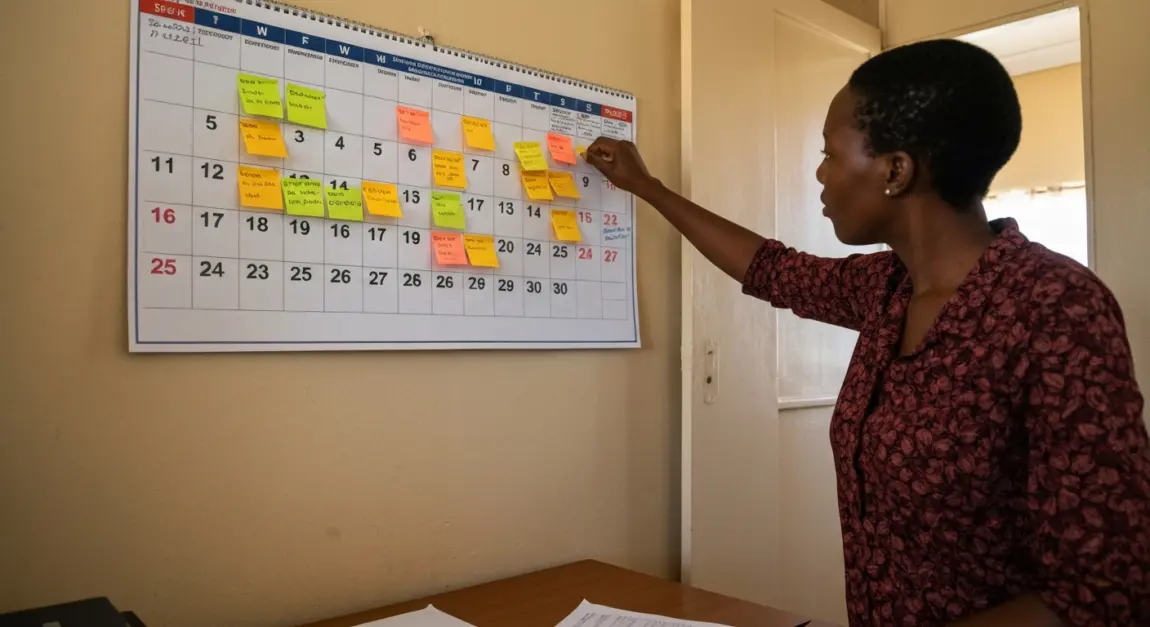
The Tender Timeline: From Advert to Award
Tendering is not a “quick money” scheme. It requires patience and planning.
- The Advert: The tender is published with a specific closing date and time (e.g., 10:00 AM on a Friday).
- The Site Visit/Pre-bid Meeting: Some tenders (like construction) require you to attend a meeting. If it is “Compulsory” and you miss it, you cannot bid.
- Submission: You usually submit physical copies in a sealed envelope to a specific “Tender Box.” Always aim to submit at least a day early to avoid traffic or last-minute printer issues.
- Evaluation: A committee reviews the bids. This can take weeks or months.
- Award: If you win, you receive an award letter. If you lose, you have the right to ask for a “debrief” to learn why you weren’t successful.
Common Beginner Mistakes to Avoid
Even experienced companies lose tenders for simple reasons. Avoid these traps:
- Unsigned Documents: Forgetting to sign a specific form is an automatic fail.
- Expired Certificates: Check that your trading license and tax clearance are valid on the date of submission.
- Missing the Tender Box: Don’t leave it to the last 15 minutes. Gaborone traffic can be unpredictable!
- Over-promising: Don’t say you can deliver in 2 days if you know it takes 10. You could be blacklisted for failing to perform.
Conclusion
Winning your first tender in Botswana can change the trajectory of your business. Start small—look for “Micro” or “Small” grade tenders at the PPRA level before aiming for multimillion-pula projects. By staying compliant, pricing accurately, and following instructions to the letter, you can build a reputable business that the government and private sector can trust.
Want to improve your business visibility so tender committees can find your brand online? Add your business to the Lephutshi Directory today. If you need help setting up a professional online presence, contact Lephutshi Developers. For those looking to sharpen their business skills, check out the courses on Dithutong.
Recommended Reading
- Compliance Checklist for New Businesses in Botswana
- How to Get a BURS Tax Clearance Certificate
- Step-by-Step Guide to Registering a Company with CIPA
- Official PPRA Website (External)
FAQ
- How do I get tenders in Botswana?
You must first register your business with CIPA, get a Tax Clearance from BURS, and register with the PPRA. Once compliant, monitor the Daily News and government portals for opportunities that match your services. - Which website is best for tenders in Botswana?
The Botswana Government Portal and the PPRA website are the most reliable sources for public tenders. - What is PPRA registration?
PPRA (formerly PPADB) is the body that regulates government buying. Registration is mandatory if you want to bid for government work. You are assigned “Codes” based on what you do (e.g., Code 01 for Agriculture). - How long does the tender process take?
It varies. A simple supply tender might be awarded in 4-8 weeks, while complex construction projects can take several months to evaluate. - Can a new business win a tender?
Yes, especially if the tender is reserved for youth-owned businesses or small-scale providers. Start with smaller quotes (informal tenders) to build a track record.