

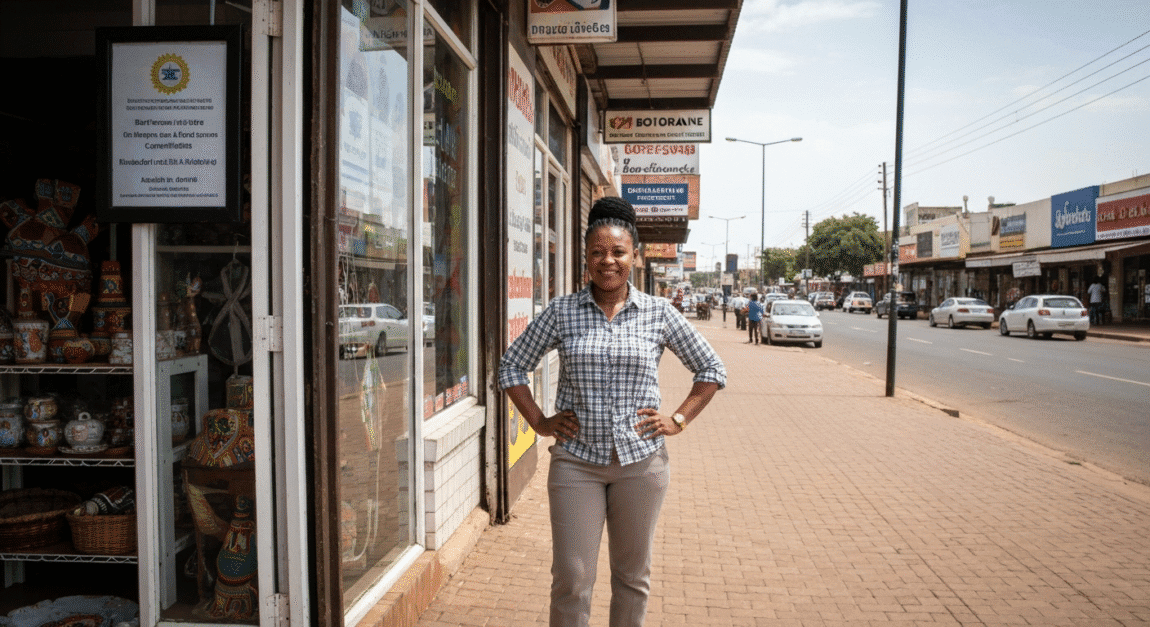
trading license Botswana business license Lephutshi

How to Obtain a Trading License in Botswana

Starting or expanding a business in Botswana is an exciting journey, but to operate legally and avoid heavy fines, you must secure a valid trading license. Whether you are opening a tuckshop in Maun, a boutique in Gaborone’s CBD, or a consultancy firm in Palapye, having the right paperwork is your foundation for growth.

Many entrepreneurs confuse company registration with a trading license. While registering your company with CIPA gives you a legal name, the trading license—issued by your local Town or District Council—gives you the legal right to trade from a specific physical location.

What is a Trading License in Botswana?

A trading license is a formal permit issued under the Trade Act of 2019. It confirms that your business premises have been inspected and meet safety, health, and zoning standards. In Botswana, these are managed by local authorities like the Gaborone City Council (GCC), Francistown City Council, or various District Councils (e.g., Kweneng or Central District).

Without this license, you cannot legally open your doors to the public. More importantly, you will need a valid trading license to apply for a business bank account, apply for CEDA loans, or bid for government tenders.

Who Needs a Trading License?

If you are selling goods or providing services for profit in a fixed location, you likely need a license. This includes:

  • Retailers: General dealers, supermarkets, clothing stores, and pharmacies.
  • Service Providers: Hair salons, dry cleaners, car washes, and funeral parlors.
  • Wholesalers: Businesses selling in bulk to other retailers.
  • Industrial/Manufacturing: Bakeries, furniture makers, and workshops.

Even informal traders are encouraged to register with their local councils to benefit from designated trading spots and government support. For a full list of regulated activities, you can check the Ministry of Trade’s informal sector guidelines.

Trading License Requirements and Documents Needed

Before you head to the council or log into the online portal, ensure you have a complete compliance checklist. Missing one document can delay your application by weeks.

Entrepreneur in Botswana reviewing trading license documents on a home office table
Keep your CIPA documents and Tax Clearance ready before applying.

Commonly required documents:

  • CIPA Documents: Certified copy of your Certificate of Incorporation and Company Extract.
  • Identity Documents: Certified copies of Omang for citizens or Passports for non-citizens (directors/shareholders).
  • Lease Agreement: A valid lease for your business premises or a Title Deed if you own the property.
  • Zoning Certificate: Proof from the Physical Planning department that the location is zoned for business use.
  • Tax Clearance Certificate: A valid certificate from BURS. Learn how to get your Tax Clearance here.
  • Health & Fire Reports: For food-related or high-risk businesses, you must pass inspections first.

How Much Does a Trading License Cost in Botswana?

The trading license Botswana cost varies depending on the type of business and the specific council. While the Trade Act of 2019 simplified many fees, you can generally expect the following ranges:

License TypeEstimated Annual Fee (BWP)
General Dealer / Small RetailP500 – P1,000
Hairdresser / Barber / SalonP200 – P500
WholesaleP1,500 – P3,000
Workshop / IndustrialP1,000 – P2,000

Note: These fees are subject to change by the Ministry of Investment, Trade and Industry (MITI). Always confirm the exact amount with your specific council cashier.

Step-by-Step Guide to the Application Process

Step 1: Secure Your Business Premises

Before applying, you must have a physical location. Avoid signing long-term leases until you verify the zoning with the local council. If you plan to run a home-based business, you must apply for a “Change of Land Use” or a specific home-occupation permit, which can be a lengthy process.

Step 2: Submit Your Application

You can apply in two ways:

  • In-Person: Visit the Commercial Office at your local Town or District Council. Fill out Form 1 and attach your documents.
  • Online: Use the Tokafatso ya Botshelo jwa me portal. This is the government’s digital system designed to speed up trade licensing.

Step 3: Site Inspection

After submission, the council will schedule an inspection. Officers from Environmental Health, Physical Planning, and sometimes Building Control or Fire Safety will visit. They check for sanitation, proper ventilation, fire extinguishers, and compliance with the building plan.

Step 4: Approval and Payment

Once the inspectors give the green light, your application is reviewed by the Licensing Committee. If approved, you will be notified to pay the license fee. Most councils accept debit cards (swiping), cash, or bank transfers (EFT). Some are beginning to integrate mobile payments like Orange Money for smaller fees.

Renewal of Trading License

A trading license is typically valid for 12 months. You must renew it annually to avoid penalties. In Botswana, the peak renewal season is often between January and March, though it technically depends on your issuance date.

  • Late Fees: Failure to renew on time can result in a penalty (often 10% to 25% of the license fee per month of delay).
  • Required for Renewal: You will usually need your original license, a fresh Tax Clearance, and proof that your business operations haven’t changed.

If you ever decide to close your shop, make sure to follow the process to deregister or close your business profile to avoid accruing back-dated fees.

Common Pitfalls and Pro-Tips

  • Check Zoning First: Do not pay rent for a space in a residential area expecting to get a hardware store license. The council will reject it unless it is a designated commercial plot.
  • Keep Your Tax File Clean: You cannot get a license without a Tax Clearance Certificate. Ensure you file your BURS returns on time.
  • Signage: Once you have your license, you may need a separate Signage Permit to put up a billboard or large sign outside your shop.

Conclusion

Getting your trading license in Botswana is a mark of a professional, compliant business. It protects you from legal shutdowns and opens doors to growth opportunities. Once your license is in hand, the next step is making sure customers can find you.

Ready to get discovered? Add your business to Lephutshi today to boost your local visibility. If you need help building a professional online presence, contact Lephutshi Developers for expert SEO and website design. For those looking to master new skills, explore local courses on Dithutong.

Recommended Resources

Frequently Asked Questions (FAQ)

1. How long does it take to get a trading license in Botswana?

On average, it takes between 5 to 14 working days, depending on how quickly the council can conduct site inspections and how complete your documentation is.

2. Can I run a business from home without a license?

Technically, no. Every commercial activity requires a permit. You must apply for a home-based business license, and the council will check if your activity disturbs neighbors (e.g., loud noise or heavy traffic).

3. What is the difference between a Trade License and a Liquor License?

A Trade License covers general goods and services. A Liquor License is governed by a separate Act and has much stricter rules regarding location (distance from schools/churches) and operating hours.

4. Do I need a license for an online store in Botswana?

Currently, Botswana is updating its digital trade laws. However, if you have a physical warehouse or office where you keep stock, you still need a trading license for that premises.


Related Posts

Benefits of Registering Your Business in Botswana advantages Lephutshi

Benefits of Registering Your Business in Botswana

{
“focus_keyword”: “benefits of registering a business in Botswana”,
“suggested_seo_title”: “10 Key Benefits of Registering a Business in Botswana (%currentyear%)”,
“suggested_meta_description”: “Discover the top benefits of registering a business in Botswana, from winning tenders and CEDA funding to legal protection and tax incentives. Start today!”,
“suggested_excerpt”: “Thinking of formalizing your startup? From winning government tenders to accessing CEDA funding and protecting your personal assets, explore the practical benefits of registering your business in Botswana.”,
“updated_html”: “

Running a business in Botswana offers many opportunities, but many entrepreneurs start informally to test the waters. While staying informal might seem easier at first, it often limits how much you can grow. Registering your business through the Companies and Intellectual Property Authority (CIPA) is the first step toward turning a side hustle into a sustainable enterprise.

\\n\\n

The main benefits of registering a business in Botswana include legal protection for your personal assets, eligibility for government tenders, and access to funding from institutions like CEDA. In this guide, we will break down why moving from informal to formal is the best move for your business growth.

\\n\\n

1. Legal Recognition and Personal Asset Protection

\\n

When you operate an unregistered business, you and the business are seen as the same legal entity. This means if the business owes money, your personal property—like your car or house—could be at risk. Formalizing your business, especially as a Proprietary Limited (Pty Ltd) company, creates a separate legal identity.

\\n\\n

\\\"Official
A CIPA registration certificate is your proof of legal existence in Botswana.

\\n\\n

Limited Liability & Brand Protection

\\n

With limited liability, your personal assets are generally protected from business debts. Additionally, registering your name with CIPA ensures no one else can legally use your business name in Botswana. For more details on protecting your identity, see our guide on protecting your brand and registering a trademark.

\\n\\n\\n\\n

2. Access to Government Tenders and Corporate Contracts

\\n

If you want to provide services to the government or large companies like Debswana or Choppies, you must be registered. These organizations require formal documentation, including a Certificate of Incorporation and a valid Tax Clearance Certificate.

\\n\\n

\\\"Botswana
Registration is the key to unlocking high-value contracts and tenders.

\\n\\n

Winning Tenders and Building Trust

\\n

Most government departments and the Public Procurement Regulatory Authority (PPRA) require businesses to be formal entities. Being registered allows you to bid for projects that can scale your operations overnight. It also makes you a more attractive partner for corporate clients who need professional invoices and tax compliance.

\\n\\n\\n\\n

3. Better Access to Funding and Business Banking

\\n

One of the biggest hurdles for Batswana entrepreneurs is capital. Whether you are looking for a loan or an investor, formal registration is non-negotiable. Financial institutions need to see that your business is a structured, legal entity before they can trust you with money.

\\n\\n

\\\"Bank
Registration is a requirement for opening a dedicated business bank account.

\\n\\n

CEDA, LEA, and Commercial Banks

\\n

To get business funding in Botswana, institutions like CEDA (Citizen Entrepreneurial Development Agency) require a full set of registration documents. Similarly, commercial banks like FNB, Stanbic, or Absa require these papers to open a business bank account, which helps you keep your personal and business finances separate.

\\n\\n

4. Tax Benefits and BURS Compliance

\\n

While paying tax might seem like a burden, being a registered taxpayer with the Botswana Unified Revenue Service (BURS) comes with perks. Registered businesses can often claim back certain expenses, and for those in manufacturing or specific sectors, there are lower corporate tax rates available.

\\n\\n\\n\\n

Ensuring you have a Tax Identification Number (TIN) is essential for importing goods or exporting your products across borders. If you are reaching high turnovers, you may also need to register for VAT, which allows you to claim back VAT on business purchases.

\\n\\n

5. Improved Credibility and Customer Trust

\\n

In the digital age, customers are wary of scams. When a customer sees that you have a formal business name, a physical or digital address, and a professional listing, their trust in you increases. This is especially true for service providers like plumbers, consultants, or transport and logistics companies.

\\n\\n

Practical Local Visibility

\\n

Once registered, you can boost your credibility by listing your business on Lephutshi. This allows local customers to find you via Google and verify your services. Add your business listing here to start getting discovered.

\\n\\n

6. Access to Government Support and Training

\\n

The Botswana government, through the Local Enterprise Authority (LEA) and the Botswana Investment and Trade Centre (BITC), offers training, mentorship, and factory space to SMEs. However, these programs are almost exclusively reserved for registered businesses.

\\n\\n\\n\\n

Risks of Remaining Informal

\\n

While it might be tempting to avoid the costs of company registration, the risks often outweigh the savings:

\\n

    \\n

  • Difficulty in getting paid: Corporate clients won’t pay into personal bank accounts or via informal methods like Orange Money for large invoices.
  • \\n

  • Limited Growth: You cannot hire a large team, rent formal office space, or apply for specialized trading licenses.
  • \\n

  • Legal Vulnerability: You are personally liable for any accidents or contractual failures.
  • \\n

\\n\\n\\n\\n

Conclusion: Formalizing for Success

\\n

The benefits of registering a business in Botswana—from legal protection and CEDA funding to winning government tenders—far outweigh the initial effort of filing paperwork on the CIPA OBRS system. Registration turns your hobby into a professional asset that can be scaled, sold, or passed down to your family.

\\n\\n

Ready to grow your business visibility in Botswana? Add your business to the Lephutshi Directory. If you need a professional website to match your new registered status, contact Lephutshi Developers. For those looking to sharpen their skills, explore Dithutong for online learning.

\\n\\n

Recommended Reading

\\n

\\n\\n

Frequently Asked Questions

\\n

    \\n

  1. Why should I register my business in Botswana?
    Registering ensures legal recognition, protects your personal assets through limited liability, and allows you to apply for government tenders and CEDA funding.
  2. \\n

  3. What documents do I need to register?
    You primarily need your Omang (or Passport for non-citizens) and a unique business name to start the process on the CIPA OBRS portal.
  4. \\n

  5. Can I open a bank account without registration?
    Most Botswana banks require a Certificate of Incorporation and a Form 2 (List of Directors) to open a formal business bank account.
  6. \\n

  7. Does registration mean I have to pay tax immediately?
    You must register with BURS, but you only pay income tax if your business makes a profit above the taxable threshold.
  8. \\n

  9. How long does the registration process take?
    With the Online Business Registration System (OBRS), simple company registrations can often be completed within 24 to 48 hours if all documents are in order.
  10. \\n

\\n\\n\”,
“internal_links_added”: [
“https://lephutshi.com/protecting-your-brand-register-trademark-botswana/”,
“https://lephutshi.com/tax-clearance-certificate-botswana/”,
“https://lephutshi.com/get-business-funding-botswana-guide/”,
“https://lephutshi.com/best-business-bank-account-botswana/”,
“https://lephutshi.com/obtaining-tax-identification-number-botswana/”,
“https://lephutshi.com/how-to-register-for-vat-in-botswana/”,
“https://lephutshi.com/botswana-transport-logistics-industry/”,
“https://lephutshi.com/trading-license-botswana/”,
“https://lephutshi.com/add-listing/”,
“https://lephutshi.com/business-taxes-botswana-overview/”
],
“external_links_kept_or_added”: [
“https://cipa.co.bw”
],
“eeat_improvements_made”: [
“Added specific mentions of CIPA OBRS, CEDA, LEA, and BURS to ground the advice in local Botswana reality.”,
“Clarified the difference between Pty Ltd (Limited Liability) and informal trade to show expertise in local business structures.”,
“Included practical local visibility advice (Lephutshi listing) to help readers with the next stage after registration.”,
“Emphasized compliance documents like Tax Clearance and VAT registration which are essential for tenders.”
],
“notes_for_review”: [
“The focus keyword ‘benefits of registering a business in Botswana’ is used in the first paragraph and an H2.”,
“All 5 required Elementor shortcodes are preserved and distributed through the text.”,
“The FAQ schema has been updated and consolidated to avoid duplicates.”,
“Internal links were added to relevant high-authority local compliance and funding pages.”
]
}

Learn More »
Stay ahead of competition

Subscribe To Our Newsletter

..and get notified on new Listings, articles, promotions and more.