

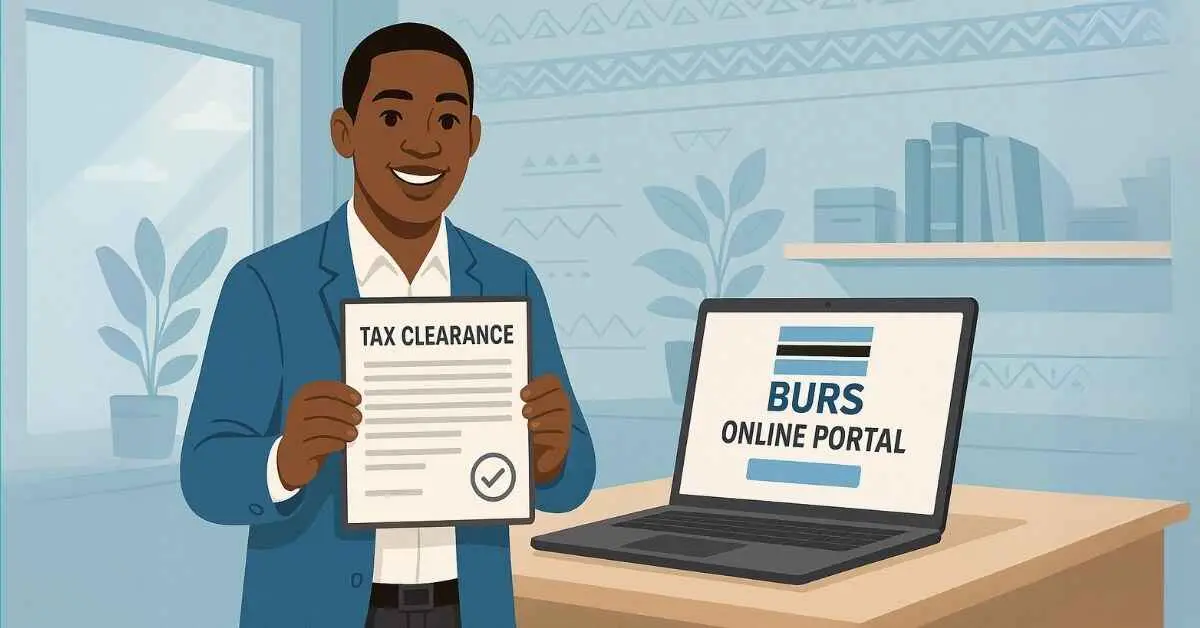
Botswana official holding a tax clearance certificate in Botswana, BURS tax clearance, Dithutong Gaborone

How to Get a Tax Clearance Certificate in Botswana

In Botswana’s fast-evolving business landscape, staying on top of tax obligations is more important than ever. Whether you run a small startup or a large enterprise, having a valid tax clearance certificate is crucial to prove your compliance.

This guide covers everything you need to obtain a tax clearance certificate in Botswana online, including the latest notes, a step-by-step BURS e-Services process, and common pitfalls to avoid.

What Is a Tax Clearance Certificate?

A Tax Clearance Certificate (TCC) is an official document issued by the Botswana Unified Revenue Service (BURS) confirming your business is compliant with its tax obligations. In short, it signals that your filings are up to date and your assessed liabilities (including any penalties and interest) are settled—reinforcing your credibility with banks, suppliers, partners, and tender committees.
What Is a Tax Clearance Certificate
A Tax Clearance Certificate (TCC) confirms business is compliant .

Why Businesses Need a Tax Clearance

A valid BURS tax clearance is frequently mandatory for government tenders, supplier onboarding, opening/maintaining corporate bank accounts, and a growing number of private sector contracts. Beyond eligibility, a TCC helps you avoid administrative delays and penalties, keeps your brand reputation intact, and unlocks opportunities that require proof of tax compliance in Botswana.

Requirements & Eligibility

Before you begin, make sure you can demonstrate full compliance and gather the documents you’ll need during the online application.

Common Documentation Required

  • Company registration documents (Certificate of Incorporation, Share Certificates, and any name change certificates)
  • Tax Identification Number (TIN) and BURS e-Services login
  • Up-to-date tax returns (e.g., Income Tax, VAT, PAYE, Withholding Tax where applicable)
  • Proof of settlement of any outstanding taxes, penalties, and interest
  • Recent financial statements or supporting schedules if requested during verification

Latest Updates You Should Know

BURS continues to enhance its e-Services portal, with additional verification checks to curb non-compliance. In some cases, you may be prompted to upload extra supporting documents before approval is granted. Always confirm the latest requirements and timelines on the official BURS channels.

Step-by-Step: How to Apply for a Tax Clearance Certificate

Follow these steps to apply via BURS e-Services efficiently and avoid avoidable delays.

Step 1 – Make Sure All Returns & Payments Are Current

Confirm that all relevant returns (e.g., VAT, PAYE, Withholding Tax, and Income Tax) have been submitted and any assessed liabilities are fully paid. If there are late filings or outstanding balances, settle them first—these are the most common reasons for TCC delays or rejections.

Step 2 – Apply via the BURS e-Services Portal

Sign in to the BURS e-Services platform using your credentials. Locate the tax clearance certificate Botswana online application and complete it carefully. Ensure your entity name, TIN, and contact details match your BURS registration information.

Screenshot References and Online Form Tips

Expect fields for company details, TIN, contact information, and declarations. Double-check spellings and numerical entries—typos in TINs or registration numbers can stall processing. If the system asks for additional documents, upload clear, legible files in the recommended formats.
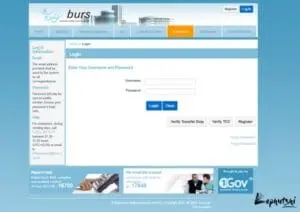
BURS e-Service portal screenshot sample

Common Pitfalls and Mistakes to Avoid

  • Submitting while prior returns or payments are still outstanding
  • Incorrect TIN or company registration details
  • Missing or unreadable attachments (e.g., low-quality scans)
  • Using contact details that you don’t monitor (you may miss follow-up requests)

5.3 Step 3 – Receive and Download Your TCC

Once approved, you’ll receive your tax clearance certificate via email or directly in your BURS e-Services account. Download and save multiple copies (PDF), and share a copy with your procurement, banking, or compliance counterparts when requested.

How Long Is the Certificate Valid?

Tax clearance certificates are generally valid for 12 months from the date of issue. Because the online system can flag issues during renewal (e.g., new assessments or late filings), plan ahead and leave enough time for any verifications to be completed.

Renewal Tips (2025)

  • Set reminders to begin renewal well before expiry—don’t wait for tender deadlines.
  • Re-confirm all returns and payments are current before you click “apply”.
  • Keep your BURS e-Services profile details updated (email, phone, directors where applicable).

Corporate team finalizing Botswana tax forms

Pro Tips to Maintain Ongoing Tax Compliance

Staying compliant year-round prevents last-minute scrambles and helps your renewals proceed smoothly.

Automate Key Dates

Use calendar reminders or a finance task manager to track monthly, quarterly, and annual filing deadlines. Assign owners and due dates to avoid slippage during busy periods.

Work with a Local Accountant

An accountant who understands Botswana tax rules can review your ledgers, reconcile VAT/PAYE, and pre-empt issues that trigger verification. Consider accounting tools that export clean reports if BURS requests additional documentation.

Conclusion & Next Steps

Getting a tax clearance certificate in Botswana is straightforward when your filings and payments are current, your BURS e-Services profile is accurate, and your documentation is ready. Follow the steps above, keep an eye on timelines, and renew early to stay continuously eligible for tenders, supplier onboarding, and banking processes.

Ready to showcase your business to local customers? List your company with Lephutshi (Online Directory Botswana) and reach a wider audience.


Recommended Reading

Frequently Asked Questions

You can apply online via the BURS e-Service portal, ensuring all your tax returns are filed and up to date. If everything is in order, you’ll receive an approved TCC.

Most certificates are valid for 12 months. However, always check with BURS for any recent changes to validity periods.

A valid TCC proves your tax compliance, which can be mandatory for government tenders, business banking, and certain private sector contracts.

Generally, you need a valid TIN, up-to-date tax returns, relevant financial documentation, and no outstanding fees or levies.

Yes. Use your registered credentials to sign in to the BURS e-Services portal and complete the TCC application. Ensure prior returns and payments are fully up to date before applying.

Processing time varies based on your compliance status and whether BURS requests additional documentation. Apply early—well before a tender or banking deadline—to allow for verification.

Usually not until those amounts are settled. Clear any outstanding assessments, penalties, and interest, then reapply.

Late or missing returns, unpaid balances (including penalties/interest), incorrect TIN/company details, and incomplete or unreadable attachments.

Yes. Many tenders, supplier onboardings, and bank processes require proof of tax compliance regardless of business size.

Update your BURS e-Services profile and supporting corporate records first, then proceed with the Tax Clearance Certificate application to avoid mismatches that trigger review.

Update your BURS e-Services profile and supporting corporate records first, then proceed with the Tax Clearance Certificate application to avoid mismatches that trigger review.

Yes—provided it’s still valid. Most entities will accept the same certificate until the expiry date.

Related Posts

Benefits of Registering Your Business in Botswana advantages Lephutshi

Benefits of Registering Your Business in Botswana

{
“focus_keyword”: “benefits of registering a business in Botswana”,
“suggested_seo_title”: “10 Key Benefits of Registering a Business in Botswana (%currentyear%)”,
“suggested_meta_description”: “Discover the top benefits of registering a business in Botswana, from winning tenders and CEDA funding to legal protection and tax incentives. Start today!”,
“suggested_excerpt”: “Thinking of formalizing your startup? From winning government tenders to accessing CEDA funding and protecting your personal assets, explore the practical benefits of registering your business in Botswana.”,
“updated_html”: “

Running a business in Botswana offers many opportunities, but many entrepreneurs start informally to test the waters. While staying informal might seem easier at first, it often limits how much you can grow. Registering your business through the Companies and Intellectual Property Authority (CIPA) is the first step toward turning a side hustle into a sustainable enterprise.

\\n\\n

The main benefits of registering a business in Botswana include legal protection for your personal assets, eligibility for government tenders, and access to funding from institutions like CEDA. In this guide, we will break down why moving from informal to formal is the best move for your business growth.

\\n\\n

1. Legal Recognition and Personal Asset Protection

\\n

When you operate an unregistered business, you and the business are seen as the same legal entity. This means if the business owes money, your personal property—like your car or house—could be at risk. Formalizing your business, especially as a Proprietary Limited (Pty Ltd) company, creates a separate legal identity.

\\n\\n

\\\"Official
A CIPA registration certificate is your proof of legal existence in Botswana.

\\n\\n

Limited Liability & Brand Protection

\\n

With limited liability, your personal assets are generally protected from business debts. Additionally, registering your name with CIPA ensures no one else can legally use your business name in Botswana. For more details on protecting your identity, see our guide on protecting your brand and registering a trademark.

\\n\\n\\n\\n

2. Access to Government Tenders and Corporate Contracts

\\n

If you want to provide services to the government or large companies like Debswana or Choppies, you must be registered. These organizations require formal documentation, including a Certificate of Incorporation and a valid Tax Clearance Certificate.

\\n\\n

\\\"Botswana
Registration is the key to unlocking high-value contracts and tenders.

\\n\\n

Winning Tenders and Building Trust

\\n

Most government departments and the Public Procurement Regulatory Authority (PPRA) require businesses to be formal entities. Being registered allows you to bid for projects that can scale your operations overnight. It also makes you a more attractive partner for corporate clients who need professional invoices and tax compliance.

\\n\\n\\n\\n

3. Better Access to Funding and Business Banking

\\n

One of the biggest hurdles for Batswana entrepreneurs is capital. Whether you are looking for a loan or an investor, formal registration is non-negotiable. Financial institutions need to see that your business is a structured, legal entity before they can trust you with money.

\\n\\n

\\\"Bank
Registration is a requirement for opening a dedicated business bank account.

\\n\\n

CEDA, LEA, and Commercial Banks

\\n

To get business funding in Botswana, institutions like CEDA (Citizen Entrepreneurial Development Agency) require a full set of registration documents. Similarly, commercial banks like FNB, Stanbic, or Absa require these papers to open a business bank account, which helps you keep your personal and business finances separate.

\\n\\n

4. Tax Benefits and BURS Compliance

\\n

While paying tax might seem like a burden, being a registered taxpayer with the Botswana Unified Revenue Service (BURS) comes with perks. Registered businesses can often claim back certain expenses, and for those in manufacturing or specific sectors, there are lower corporate tax rates available.

\\n\\n\\n\\n

Ensuring you have a Tax Identification Number (TIN) is essential for importing goods or exporting your products across borders. If you are reaching high turnovers, you may also need to register for VAT, which allows you to claim back VAT on business purchases.

\\n\\n

5. Improved Credibility and Customer Trust

\\n

In the digital age, customers are wary of scams. When a customer sees that you have a formal business name, a physical or digital address, and a professional listing, their trust in you increases. This is especially true for service providers like plumbers, consultants, or transport and logistics companies.

\\n\\n

Practical Local Visibility

\\n

Once registered, you can boost your credibility by listing your business on Lephutshi. This allows local customers to find you via Google and verify your services. Add your business listing here to start getting discovered.

\\n\\n

6. Access to Government Support and Training

\\n

The Botswana government, through the Local Enterprise Authority (LEA) and the Botswana Investment and Trade Centre (BITC), offers training, mentorship, and factory space to SMEs. However, these programs are almost exclusively reserved for registered businesses.

\\n\\n\\n\\n

Risks of Remaining Informal

\\n

While it might be tempting to avoid the costs of company registration, the risks often outweigh the savings:

\\n

    \\n

  • Difficulty in getting paid: Corporate clients won’t pay into personal bank accounts or via informal methods like Orange Money for large invoices.
  • \\n

  • Limited Growth: You cannot hire a large team, rent formal office space, or apply for specialized trading licenses.
  • \\n

  • Legal Vulnerability: You are personally liable for any accidents or contractual failures.
  • \\n

\\n\\n\\n\\n

Conclusion: Formalizing for Success

\\n

The benefits of registering a business in Botswana—from legal protection and CEDA funding to winning government tenders—far outweigh the initial effort of filing paperwork on the CIPA OBRS system. Registration turns your hobby into a professional asset that can be scaled, sold, or passed down to your family.

\\n\\n

Ready to grow your business visibility in Botswana? Add your business to the Lephutshi Directory. If you need a professional website to match your new registered status, contact Lephutshi Developers. For those looking to sharpen their skills, explore Dithutong for online learning.

\\n\\n

Recommended Reading

\\n

\\n\\n

Frequently Asked Questions

\\n

    \\n

  1. Why should I register my business in Botswana?
    Registering ensures legal recognition, protects your personal assets through limited liability, and allows you to apply for government tenders and CEDA funding.
  2. \\n

  3. What documents do I need to register?
    You primarily need your Omang (or Passport for non-citizens) and a unique business name to start the process on the CIPA OBRS portal.
  4. \\n

  5. Can I open a bank account without registration?
    Most Botswana banks require a Certificate of Incorporation and a Form 2 (List of Directors) to open a formal business bank account.
  6. \\n

  7. Does registration mean I have to pay tax immediately?
    You must register with BURS, but you only pay income tax if your business makes a profit above the taxable threshold.
  8. \\n

  9. How long does the registration process take?
    With the Online Business Registration System (OBRS), simple company registrations can often be completed within 24 to 48 hours if all documents are in order.
  10. \\n

\\n\\n\”,
“internal_links_added”: [
“https://lephutshi.com/protecting-your-brand-register-trademark-botswana/”,
“https://lephutshi.com/tax-clearance-certificate-botswana/”,
“https://lephutshi.com/get-business-funding-botswana-guide/”,
“https://lephutshi.com/best-business-bank-account-botswana/”,
“https://lephutshi.com/obtaining-tax-identification-number-botswana/”,
“https://lephutshi.com/how-to-register-for-vat-in-botswana/”,
“https://lephutshi.com/botswana-transport-logistics-industry/”,
“https://lephutshi.com/trading-license-botswana/”,
“https://lephutshi.com/add-listing/”,
“https://lephutshi.com/business-taxes-botswana-overview/”
],
“external_links_kept_or_added”: [
“https://cipa.co.bw”
],
“eeat_improvements_made”: [
“Added specific mentions of CIPA OBRS, CEDA, LEA, and BURS to ground the advice in local Botswana reality.”,
“Clarified the difference between Pty Ltd (Limited Liability) and informal trade to show expertise in local business structures.”,
“Included practical local visibility advice (Lephutshi listing) to help readers with the next stage after registration.”,
“Emphasized compliance documents like Tax Clearance and VAT registration which are essential for tenders.”
],
“notes_for_review”: [
“The focus keyword ‘benefits of registering a business in Botswana’ is used in the first paragraph and an H2.”,
“All 5 required Elementor shortcodes are preserved and distributed through the text.”,
“The FAQ schema has been updated and consolidated to avoid duplicates.”,
“Internal links were added to relevant high-authority local compliance and funding pages.”
]
}

Learn More »
Stay ahead of competition

Subscribe To Our Newsletter

..and get notified on new Listings, articles, promotions and more.